
Thai-Burma Railway Guided Tour: History, Sites and What to Expect
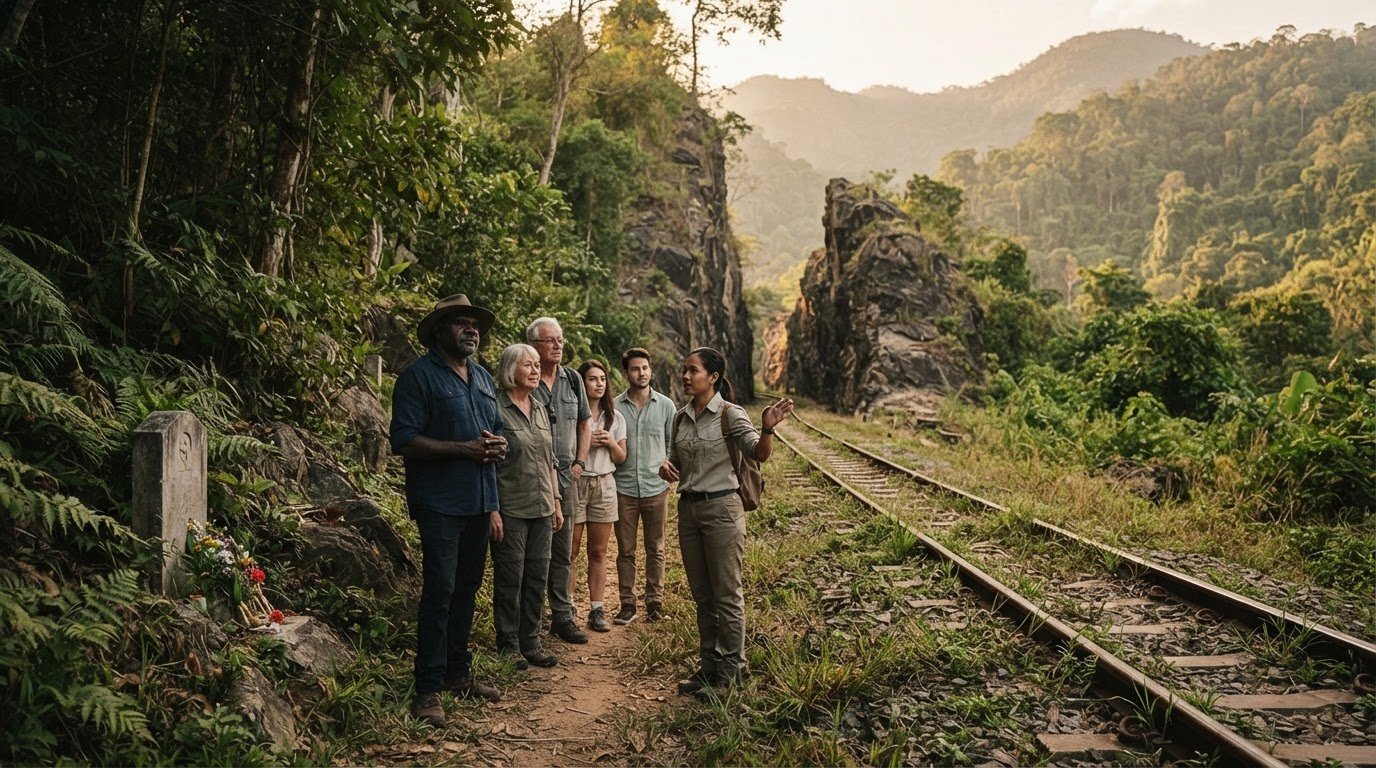
What if the railway’s most important story isn’t the track itself, but the people forced to build it? A Thai-Burma Railway guided tour helps visitors look beyond the route to understand the experiences of Allied prisoners of war and the immense human cost of construction. Historical commentary can connect individual sites with a wider account of the Second World War in Southeast Asia.
These are places of remembrance, not simply stops on a sightseeing list. Historic War Tours’ escorted Burma Thailand tours visit significant Second World War locations, including the Thai-Burma Railway and Hellfire Pass, with commentary on Allied prisoners of war. The guided format links the places you see with the people and events behind them.
This guide explains what guided interpretation can add, how escorted and independent travel compare, and what to consider before you go. It also covers practical preparation for walking, heat and respectful conduct at memorials and cemeteries, so you can plan for a more informed and thoughtful journey.
Key Takeaways
- Understand why the railway’s history must be considered through forced labour, prisoner-of-war experiences and remembrance.
- See how a Thai-Burma Railway guided tour connects individual heritage sites with the wider history of the Second World War in Southeast Asia.
- Compare escorted and independent travel by considering historical interpretation, planning responsibilities and the group experience you prefer.
- Prepare thoughtfully by reading your itinerary and noting its site visits, walking, transport and timing details.
- Explore Historic War Tours’ fully escorted Burma Thailand tours, which visit significant Second World War locations with guided historical commentary.
What a Thai-Burma Railway guided tour helps you understand
A Thai-Burma Railway guided tour explores the railway’s Second World War history and related heritage sites, connecting what visitors see with the people and events behind it. The railway is not simply a route through the landscape. Its history centres on forced labour, the experiences of Allied prisoners of war (POWs) and the continuing work of remembrance.
Why the railway remains central to wartime remembrance
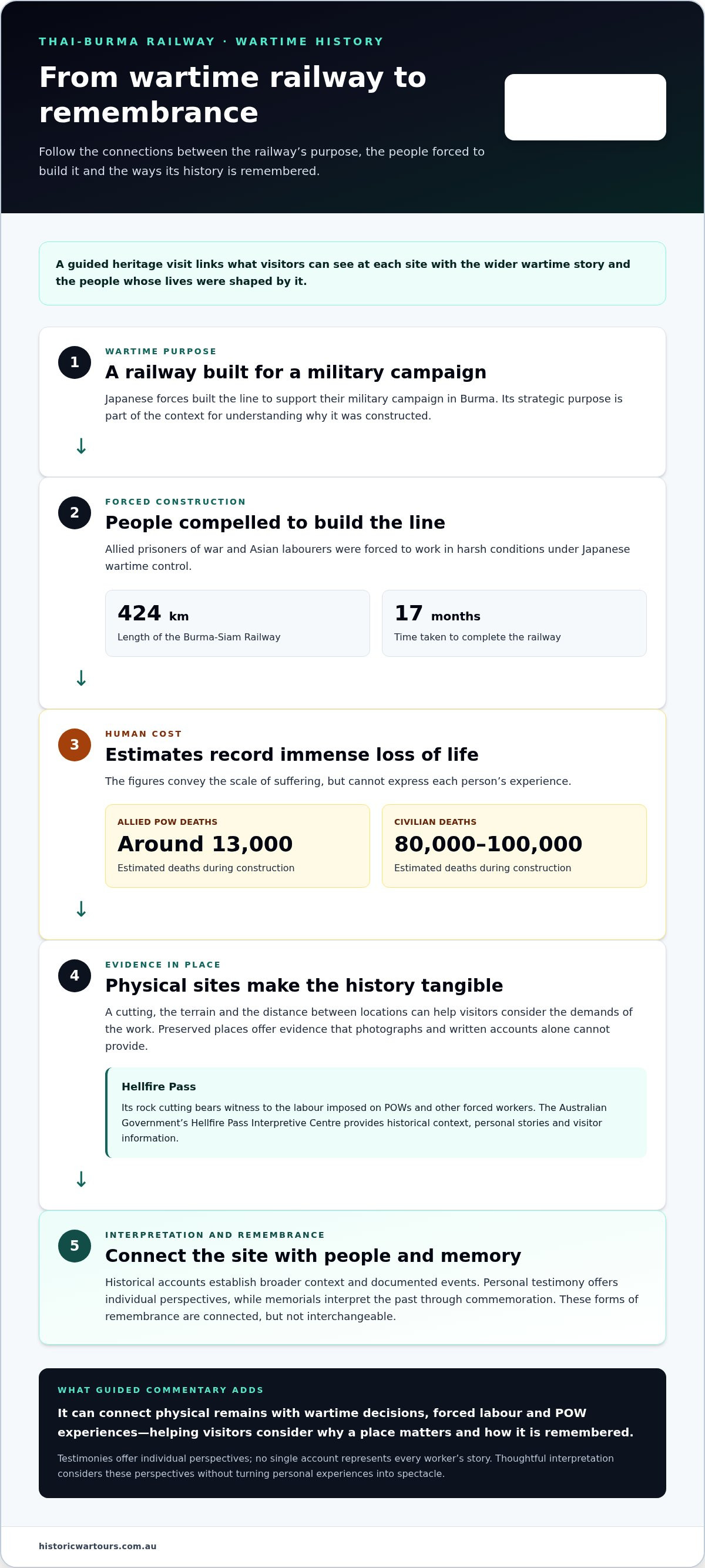
Built under Japanese wartime control, the Burma-Siam Railway stretched 424 kilometres and was completed in 17 months. Allied POWs and Asian labourers were forced to work in harsh conditions. Estimates record around 13,000 POW deaths and between 80,000 and 100,000 civilian deaths during construction. These figures convey the scale of suffering, but cannot express each person’s experience.
Historical accounts establish the broader context and documented events. Personal testimony, where preserved and shared, offers individual perspectives, while memorials interpret the past through commemoration. These forms of remembrance are connected, but not interchangeable. Reading a history of the Burma Railway can provide a foundation for understanding the railway’s construction and human cost before visiting its heritage sites.
What makes a guided heritage visit different
A guide can place a site within the wider story of wartime decisions, forced labour and POW experiences. That context helps visitors look beyond physical features, such as a cutting or railway structure, and consider why a place matters, whose lives were shaped by it and how it is remembered. Historical commentary can also distinguish documented facts from interpretation, leaving space for reflection rather than reducing a complex past to a simple sequence of events.
Historic War Tours’ fully escorted Burma Thailand tours include significant Second World War locations such as the Thai-Burma Railway and Hellfire Pass. Expert guides provide commentary on Allied prisoners of war, helping connect the sites to a broader history rather than treating them as a checklist. Read the itinerary for the specific visits and arrangements included in your journey.
How railway sites and POW stories fit into the wider history
The railway’s wartime history is best understood through connected events, not dates alone. Japanese forces built the line to support their military campaign in Burma, using Allied prisoners of war and Asian labourers as forced labour. The railway’s purpose, the conditions of its construction and the people compelled to work on it all shape what these places mean today.
Connect the railway’s construction with the human experience
At a heritage site, historical context explains why the railway was built, while POW accounts reveal how that history was lived. Testimonies describe individual experiences within a vast system of coercion and hardship. They do not represent every worker’s story, and no single account can stand for all those who suffered. A thoughtful visit considers these perspectives together without turning personal experiences into spectacle.
Historical interpretation connects the railway’s strategic purpose and physical remains with the forced labour, POW experiences and remembrance that give each site its human meaning.
Understand what heritage sites can reveal
Preserved places offer evidence that photographs and written accounts alone cannot provide. The shape of a cutting, the terrain and the distance between locations help visitors consider the demands of the work and the railway’s construction. Memorials and interpretation add another layer, honouring those who died and explaining how communities and institutions preserve their stories. Together, place and interpretation make the history more tangible without claiming to capture every experience.
Hellfire Pass is a significant site associated with the railway. Its rock cutting bears witness to the labour imposed on POWs and other forced workers. The Australian Government’s Hellfire Pass Interpretive Centre provides historical context, personal stories and visitor information. Use its information to understand the site and plan your visit; this section focuses on Hellfire Pass’s place in the wider history.
A Thai-Burma Railway guided tour can help visitors relate these locations to the broader wartime narrative. Historic War Tours’ Burma Thailand tours include Hellfire Pass and other significant Second World War locations, with expert commentary on Allied POW experiences. Explore Historic War Tours’ Burma Thailand tours as a journey through connected histories, rather than a checklist of sites.
Guided or independent: compare ways to visit the Thai-Burma Railway
There’s no single right way to visit the railway. An escorted journey brings historical commentary and organised group travel together, while independent travel gives you more control over pace and focus. Choose based on how much planning you want to handle, how much historical context matters to you and whether you prefer travelling with a group.
| Consideration | Escorted tour | Independent visit |
|---|---|---|
| Historical context | Expert commentary can connect sites with the wider wartime story and POW experiences. | You choose what to research and which accounts or themes to explore. |
| Planning | Group travel is organised as an escorted journey, with the itinerary setting out the visit. | You arrange transport, timings and site visits yourself. |
| Travel experience | You share the journey with a group focused on military history. | You can travel alone or with your own companions and set your own rhythm. |
| Time and pace | The group follows a planned itinerary, which may limit flexibility between stops. | You can spend longer at a site or adjust your plans, subject to transport and opening times. |
What guided interpretation adds to a heritage visit
A Thai-Burma Railway guided tour connects a particular place with the people and events described in historical accounts. Expert commentary on Allied POW experiences adds context to what you see, while a coherent narrative links separate visits rather than treating each as an isolated stop. When comparing tours, look at the stated historical focus and the sites included in the itinerary.
Historic War Tours organises fully escorted group tours focused on military history in Southeast Asia. Its Burma Thailand tours include significant Second World War locations such as the railway and Hellfire Pass, with historical commentary on Allied prisoners of war.
When independent travel may suit a different preference
Independent travel may suit visitors who want to choose their own focus, make space for quiet reflection or shape each day around personal interests. That flexibility comes with more responsibility: you’ll need to research the history, plan how to reach sites and manage timings. A local train can form part of an independent journey, but it won’t provide the historical interpretation of a dedicated guide.
A group visit can still leave room for reflection. You can listen, observe and take a quiet moment at a site, while recognising that the wider journey follows a shared schedule. Consider what matters most: a connected historical account and an escorted group experience, or more control over planning and pace. Either way, approach each place as a site of remembrance, not simply another stop.
Prepare for a Thai-Burma Railway tour with care and realistic expectations
Preparation helps you engage with the railway’s history and take care during site visits. Before travelling, build a foundation in the history, read the itinerary closely and consider how you want to approach places of remembrance.
Prepare emotionally and historically
Read a reliable overview of Allied prisoner-of-war experiences before you go. Historical accounts and personal testimony can help you recognise the lives behind the places you’ll visit. Some stories may be confronting. Take time to absorb them and listen respectfully when guides share accounts of individual lives and losses. You don’t need to have a response ready; quiet attention is appropriate.
Plan for the practical demands of site visits
Review the itinerary for stated walking, transport arrangements and timings. Conditions and demands vary between sites and journeys, so use the details for your chosen itinerary rather than assuming every visit is the same. Comfortable clothing and supportive footwear are sensible preparations. Consider carrying water and sun protection where appropriate to the conditions. For information on the Hellfire Pass walk, consult the Interpretive Centre’s visitor information.
Use this simple preparation sequence:
- Learn the context: read about the railway and POW experiences from a reliable historical source.
- Read the itinerary: note the sites included and the stated travel and timing arrangements.
- Prepare for visits: choose comfortable clothing and footwear, and plan for water and sun protection as conditions require.
- Make space to reflect: approach memorials and heritage sites quietly, follow site guidance and allow time to listen.
At cemeteries and memorials, keep your voice low, treat commemorative spaces with care and avoid behaviour that distracts from remembrance. A Thai-Burma Railway guided tour adds historical commentary as you travel between significant locations, while a considered pace leaves room for personal reflection. Prepare for the practical details, then give the history your attention.
Explore Historic War Tours’ escorted Burma Thailand tours for a group journey focused on military history in Southeast Asia.
Choose an escorted Thai-Burma Railway tour for deeper historical context
A considered tour choice involves more than counting the places on an itinerary. Look for a clear historical narrative, meaningful interpretation of Allied prisoner-of-war experiences, well-described visits and a travel style that suits you. Stops show where events unfolded; thoughtful commentary helps explain how those places connect to lives, loss and remembrance.
What to look for in an escorted military-history journey
Read the itinerary carefully. Note the stated sites and travel arrangements, and look for commentary that places each visit in context. A strong military-history journey explains what connects its locations rather than treating them as a checklist. Compare the stated historical focus with the subjects you want to understand, including the railway’s construction, POW experiences and remembrance.
- Historical depth: Does the journey explain the wartime context as well as identify locations?
- Guided interpretation: Does it address POW experiences and remembrance with care?
- Itinerary transparency: Are the sites and travel arrangements clearly described?
- Travel style: Would an escorted group journey suit you better than arranging each visit independently?
Historic War Tours is an Australian-owned operator of fully escorted group tours focused on military history in Southeast Asia. Its Burma Thailand tours visit significant Second World War locations, including the Thai-Burma Railway and Hellfire Pass, with expert commentary on Allied prisoners of war. The escorted format brings the sites into a broader historical account, and the itinerary explains what the journey involves.
Continue exploring the railway’s history and heritage
Further reading can help you prepare for different parts of the story. Explore the history of the Death Railway for wider wartime context, a POW legacy tour guide for perspectives on commemorative journeys, and Hellfire Pass visitor information for site-specific preparation. These topics can deepen your understanding without turning a visit into a race to cover every location.
If you value guided historical context and shared travel, explore Historic War Tours’ Burma Thailand tours and consider how their escorted format fits the journey you want to make. Let the history, interpretation and time for reflection guide your decision.
Choose a railway journey grounded in remembrance
A visit to the Thai-Burma Railway is most meaningful when its places are understood through the people and history behind them. Guided commentary connects heritage sites with Allied prisoner-of-war experiences, while careful preparation helps you approach memorials respectfully and plan realistically for site visits.
The right travel style depends on your priorities. Independent travel offers more control over pace and planning; an escorted journey brings group travel and historical interpretation together. Historic War Tours is an Australian-owned operator specialising in fully escorted military-history group tours. Its Burma Thailand tours include significant Second World War locations such as the railway and Hellfire Pass, with expert guides providing commentary on Allied prisoners of war.
If a Thai-Burma Railway guided tour feels like the right way to explore this history, explore Historic War Tours’ escorted Burma Thailand journeys. Travel thoughtfully, listen with care and carry the stories forward with respect.
Frequently Asked Questions
What is a Thai-Burma Railway guided tour?
A Thai-Burma Railway guided tour is an escorted journey exploring the railway’s Second World War history and related heritage sites. Historical commentary connects the places visited with the experiences of Allied prisoners of war and other forced labourers. Rather than treating each stop as a separate attraction, a guided journey places sites within a broader wartime story and invites visitors to approach them as places of remembrance.
Is a guided tour a good way to learn about the Thai-Burma Railway?
Yes. A guided tour can help visitors understand how the railway’s sites relate to the wider history and human cost of its construction. Expert commentary on Allied prisoners of war gives context to what you see at heritage locations. Compare the tour’s stated historical focus with the experiences and events you want to learn about.
What can I expect to see on a Thai-Burma Railway tour?
Historic War Tours’ Burma Thailand tours visit significant Second World War locations, including the Thai-Burma Railway and Hellfire Pass. These sites connect the railway’s physical history with the experiences of Allied prisoners of war. Read the itinerary for the specific visits and travel arrangements included in your journey.
How is a guided railway tour different from travelling independently?
An escorted tour combines group travel with historical interpretation, helping connect separate sites and POW experiences within one narrative. Independent travel gives you more control over pace and focus, but you take responsibility for researching the history and organising transport and visits. Choose according to whether you value guided context and an organised group journey, or greater independence and flexibility.
Can I visit Hellfire Pass as part of a Thai-Burma Railway tour?
Yes. Hellfire Pass is among the significant Second World War locations visited on Historic War Tours’ Burma Thailand tours, alongside the Thai-Burma Railway. Read the itinerary for the visits and arrangements included in your journey. For focused preparation, consult the official Hellfire Pass Interpretive Centre information about the site.
How should I prepare for a Thai-Burma Railway heritage visit?
Start by reading a reliable overview of the railway’s history and Allied prisoner-of-war experiences. Then review your itinerary’s stated sites, transport, timings and walking details. Wear comfortable clothing and supportive footwear, and consider carrying water and sun protection where conditions call for them. At memorials and cemeteries, keep your voice low, follow site guidance and make time to listen and reflect.
Is the Thai-Burma Railway tour suitable for someone new to military history?
It can be a meaningful introduction. Guided historical commentary explains the wartime context and Allied prisoner-of-war experiences without expecting you to arrive with specialist knowledge. The subject is solemn, and some accounts may be difficult to hear, so approach the visit with time and attention. Reading a short historical overview beforehand can help you follow the story and understand why the sites are remembered.