
Burma Railway Prisoners of War Tour: Choose a Journey of Remembrance
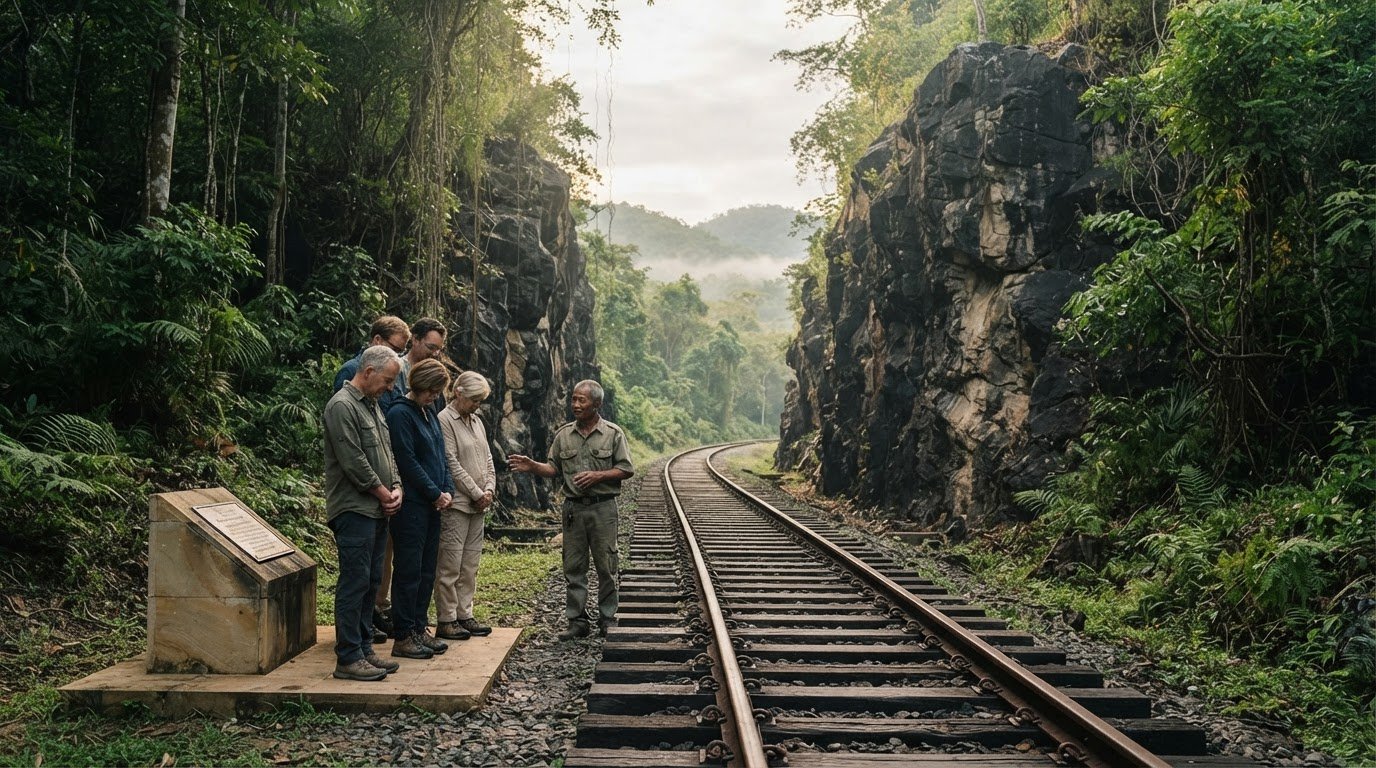
What makes a Burma railway prisoners of war tour worthy of the history it carries? More than reaching a landmark, it should help visitors understand prisoners’ experiences and remember those who suffered and died. A considered journey combines historical context, respectful reflection and the support of travelling with a group.
If you’re comparing options, it can be difficult to distinguish a specialist military-history tour from general sightseeing. You may want to know how guides approach painful history, what an escorted group journey involves, and how to prepare for visiting heritage sites. These are useful questions to consider before choosing a tour.
This guide explains what to look for, how guided and independent travel differ, and how to prepare for the emotional and practical aspects of a visit. Historic War Tours’ fully escorted, all-inclusive Burma Thailand tours include the Thai-Burma Railway and Hellfire Pass, with expert historical commentary on Allied prisoners of war. Use the points ahead to choose a historically grounded journey and encounter this history with care.
Key Takeaways
- Look for historical guiding that connects railway sites and memorials with documented prisoner of war experiences.
- Compare escorted and independent travel by considering interpretation, transport coordination, flexibility and independence.
- Prepare for your visit by considering mobility, climate, walking comfort and your personal travel needs.
- Reading about the history beforehand can help you arrive prepared while leaving room for further context on the journey.
- Learn how a Burma railway prisoners of war tour with Historic War Tours links the Thai-Burma Railway and Hellfire Pass with expert historical commentary.
Choose a Burma Railway prisoners of war tour with remembrance at its centre
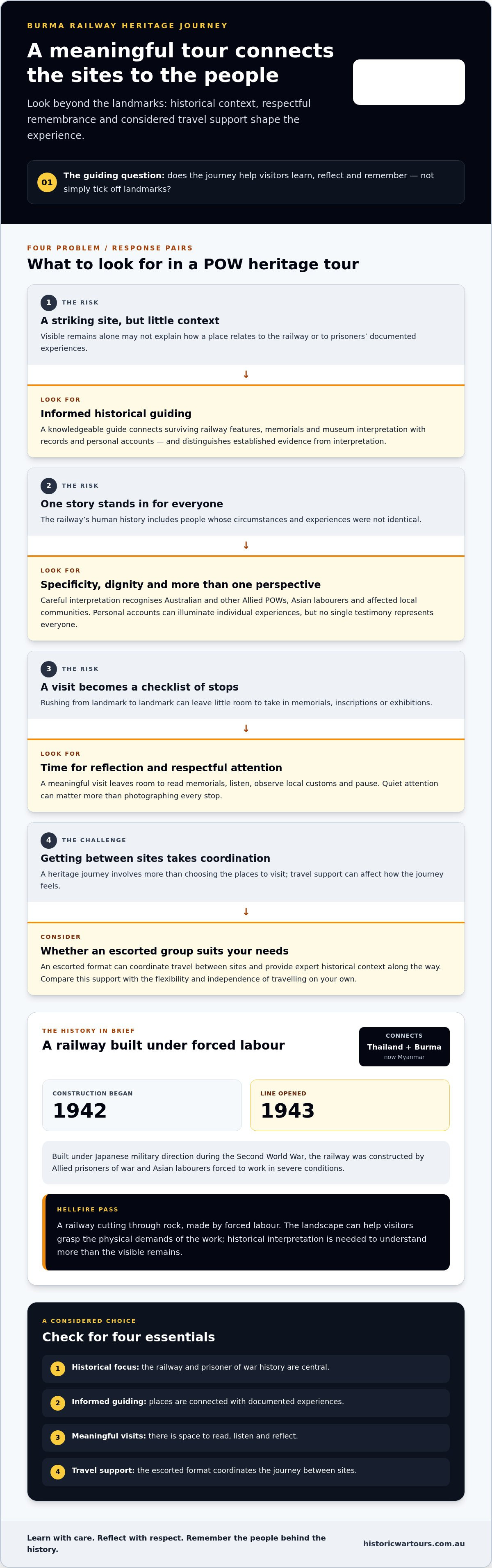
You may be considering this journey because a relative served in the war, because you want to understand the history more deeply, or because you wish to pay your respects. A Burma railway prisoners of war tour should connect significant railway sites with the experiences of the people who lived and suffered there. The aim is not simply to tick landmarks off a list. It is to learn, reflect and remember.
Before choosing a journey, consider whether it offers:
- A clear historical focus: Does the journey centre on the railway and prisoner of war history?
- Informed guiding: Does the commentary connect places with documented experiences?
- Meaningful visits: Is there room to read memorials, view exhibitions and reflect?
- Travel support: Does the escorted format coordinate the journey between sites?
Historic War Tours is an Australian-owned operator of fully escorted military-history group tours. Its all-inclusive Burma Thailand tours visit the Thai-Burma Railway and Hellfire Pass, with expert historical commentary on Allied prisoners of war.
What makes a POW heritage tour different from general sightseeing?
A site can be physically striking, yet its meaning may not be clear without historical context. A specialist guide can explain how a place relates to the railway’s construction and to prisoners’ documented experiences, helping visitors look beyond the visible remains. The Burma Railway Wikipedia article provides an overview of the railway’s purpose, construction and the involvement of Allied POWs and forced labourers.
General sightseeing and commemorative travel can include the same destinations, but they have different purposes. A heritage journey gives attention to interpretation, memorials and the people remembered there. Visitors can listen, read inscriptions and observe local customs respectfully. A quiet presence matters more than trying to photograph every stop.
Whose stories should the journey help visitors understand?
The railway’s history includes Australian and other Allied prisoners of war, as well as Asian forced labourers and local communities affected by its construction. Their circumstances and experiences were not identical. A careful account recognises this complexity rather than treating everyone’s experience as the same or reducing suffering to dramatic language.
Look for guiding that distinguishes documented facts from interpretation and makes space for more than one perspective. Prisoners’ accounts can help visitors understand conditions and daily life, while attention to local people broadens the historical picture. Each story deserves specificity and dignity.
As you compare journeys, consider what you hope to understand and how you want to engage with the sites. A historically grounded, fully escorted group journey can provide expert context and support as you travel. The right choice leaves room to learn, reflect and honour those whose lives remain part of this history.
Understand how railway sites and historical guiding shape the experience
The Thai-Burma Railway was built under Japanese military direction during the Second World War to connect rail networks in Thailand and Burma, now Myanmar. Construction began in 1942 and the line opened in 1943. Allied prisoners of war and Asian labourers were forced to work on it in severe conditions. The National Museum of Australia Burma-Thailand Railway resource explains the railway’s place in Australian history and its enduring legacy.
Hellfire Pass is a railway cutting through rock, made by forced labour during construction. The name is associated with the harsh conditions endured by workers there. The setting can help visitors grasp the physical demands of the work, but the landscape alone cannot convey each person’s experience. Historical interpretation supplies essential context.
Site context matters because it connects what visitors see with the people, events and evidence that give a commemorative place its meaning.
How should a guide bring POW history into the landscape?
A knowledgeable guide can connect surviving railway features, memorials and museum interpretation with records and personal accounts. This helps visitors understand what a cutting or track bed can, and cannot, tell them. It also adds context to memorial inscriptions and exhibition details, rather than leaving visitors to interpret each place in isolation.
Good historical guiding distinguishes established evidence from interpretation and acknowledges uncertainty where records leave questions unanswered. Commentary should be measured, not dramatic. At a significant site, a pause to read, listen or reflect can be as valuable as another fact. A Burma railway prisoners of war tour should make room for both careful explanation and quiet attention.
What should visitors learn about the railway’s human history?
Prisoners’ experiences varied by nationality, unit, location and circumstance. Australian POWs were among the Allied prisoners forced to work on the railway, alongside men from other Allied nations. Their accounts can illuminate daily conditions and the effects of forced labour, but no single testimony represents everyone’s experience. A responsible guide uses personal records with care and places them within the wider historical evidence.
The railway’s human history also includes Asian labourers and local communities. Their experiences should not be reduced to a footnote in a story centred only on Allied POWs. A fuller account recognises that different groups faced distinct pressures and losses, while avoiding unsupported comparisons or generalisations. Graphic detail is not required to communicate the gravity of what happened.
Historic War Tours’ fully escorted Burma Thailand tours include the Thai-Burma Railway and Hellfire Pass, with historical commentary on Allied prisoners of war. For Australian travellers seeking guided historical context at these sites, fully escorted Burma Thailand tours offer a considered way to encounter this history.
Compare escorted and independent Burma Railway travel before you decide
There’s no single right way to visit railway heritage sites. Your choice depends on how much structure, practical support and historical interpretation you want, as well as how much freedom you need to set your own pace. Comparing the formats can clarify what matters most before you commit to a Burma railway prisoners of war tour or plan an independent visit.
What to compare
| Consideration | Escorted group journey | Independent travel |
|---|---|---|
| Historical interpretation | Guided commentary can connect sites with POW history. | You choose what to read, research and explore. |
| Transport coordination | Group travel is coordinated as part of the escorted journey. | You organise transport between sites yourself. |
| Flexibility | A planned structure shapes the day and visits. | You can adjust your pace and time at each place. |
| Visitor independence | You travel with a group and an escort. | You make decisions and manage the visit independently. |
This comparison isn’t a ranking. Independent travel may suit visitors who enjoy researching history, arranging their own movements and choosing how long to spend at a memorial or museum. An escorted journey can reduce the work of coordinating travel and bring historical context together across visits. Consider which format will help you focus on the history rather than manage the day.
When can an escorted POW tour be the better fit?
An escorted format may suit you if you want specialist commentary at the sites and prefer a coordinated group journey. An expert guide can relate what you see to the broader historical record. Travelling with others can also create a shared setting for remembrance, while leaving each visitor room for personal reflection.
What should you compare between guided tour options?
Look beyond the word “escorted”. Compare how prominently POW history shapes the journey, whether memorial visits and railway sites are central, and how expert commentary supports understanding. Pacing matters too: a tightly scheduled day may leave little time to absorb a place, while considered pauses can make space for reflection.
- Historical emphasis: Is POW history a central focus or one topic among many?
- Site visits: Are railway heritage and memorials given meaningful attention?
- Pacing: Does the structure allow time at sites, as well as travel between them?
- Support: Does the escorted format provide the coordination you want?
Historic War Tours’ fully escorted Burma Thailand tours include visits to the Thai-Burma Railway and Hellfire Pass, with expert historical commentary on Allied prisoners of war. Let your preferred balance of structure, independence and historical depth guide your decision.
Prepare for the emotional and practical demands of a railway heritage journey
A Burma railway prisoners of war tour may bring difficult history close. Give yourself time to prepare for both the physical demands of site visits and the feelings that can arise at places of remembrance. You don’t need to know every detail before you go, but some preparation can help you stay present and engage thoughtfully.
Use this sequence as a starting point:
- Review the itinerary: Walking distances, surfaces and daily logistics depend on the tour. Consider your mobility and read the published itinerary with your personal accessibility needs in mind.
- Plan for conditions: Choose comfortable footwear and clothing suited to the day’s climate and planned walking. Consider your personal health and travel needs as you prepare.
- Read for context: Familiarise yourself with the railway’s history and key terms. Leave room for a guide’s interpretation to deepen what you’ve learned.
- Allow space to pause: Consider how you might respond to emotionally weighty accounts, and give yourself permission to take a quiet moment when needed.
How can you prepare for site visits respectfully?
Before departure, consider what helps you walk comfortably and compare your accessibility needs with the published itinerary. Walking demands vary by site, so don’t assume every visit will be the same. At memorials, follow local guidance, dress modestly, keep noise low and avoid touching or climbing on historic structures. Give other visitors space to pay their respects.
How should you approach difficult history while travelling?
Set a simple intention before arriving at a significant site: to learn, to remember, or to understand a family connection more fully. You don’t have to photograph every place or absorb every detail at once. Listen carefully, read memorial inscriptions and pause if the history feels heavy. Questions grounded in empathy and evidence can deepen understanding without turning suffering into spectacle.
Visitors may respond differently. A family connection can make a place feel personal; for others, the value lies in learning about people whose lives were shaped by the railway. Neither response needs to be performed or explained. Respectful attention and patience with yourself and fellow travellers are enough.
A fully escorted journey provides structure and historical commentary, while leaving room for personal reflection. Historic War Tours’ Burma Thailand tours visit the Thai-Burma Railway and Hellfire Pass. Explore fully escorted Burma Thailand tours to consider a guided journey grounded in historical understanding and remembrance.
Explore a fully escorted Burma Thailand tour with Historic War Tours
For Australian travellers seeking a journey shaped by military history, Historic War Tours offers fully escorted group tours across Southeast Asia. Its Burma Thailand tours visit significant Second World War locations, including the Thai-Burma Railway and Hellfire Pass. Expert historical commentary focuses on Allied prisoners of war, helping visitors consider the human experiences behind the places they encounter.
A specialist focus can bring useful continuity to a visit. Rather than treating each site as an isolated stop, travellers can follow historical connections through the journey and place what they see within a wider account. The escorted group format provides structure and shared travel when visiting heritage sites. It offers a considered way to engage with difficult history while leaving space for individual reflection.
What can a specialist escorted journey bring to the experience?
A military-history focus keeps interpretation close to the subject that matters to you. Commentary on Allied POW experiences adds context at railway heritage locations and supports a more informed visit. Travelling as part of an escorted group brings people together around a shared purpose, without requiring every traveller to respond in the same way. Remembrance can be collective and personal at once.
For readers considering a Burma railway prisoners of war tour, the distinction lies in how the history shapes the journey. The sites are not simply destinations to pass through. They invite attention to evidence, memory and the lives affected by the railway. A guided format can connect these themes while coordinating group travel, leaving room for personal thought.
How can you take the next step thoughtfully?
Before deciding, review the Burma Thailand tour information and its itinerary. Consider whether the journey’s historical emphasis, travel structure and escorted support align with your priorities. You might also reflect on how much interpretation you value at sites and how you prefer to balance guided context with time for personal thought.
- Historical focus: Does the tour’s POW commentary match what you want to understand?
- Sites: Do visits to the Thai-Burma Railway and Hellfire Pass align with your interests?
- Travel style: Does an escorted group journey offer the structure you prefer?
- Personal readiness: Does the itinerary suit your practical needs and the way you want to engage with remembrance?
There’s no need to rush the decision. Read the tour details, weigh them against your reasons for travelling, and choose a journey grounded in respect. Explore Historic War Tours and consider its Burma Thailand tour for your historical interests and remembrance.
Carry remembrance beyond the journey
A visit to railway heritage sites can prompt questions that stay with you after you return home: whose testimony deserves attention, how should difficult histories be shared, and what does remembrance ask of us now? Let those questions guide your choice of a Burma railway prisoners of war tour, and the way you listen, reflect and speak about what you learn.
Before taking the next step, consider what you hope to carry from the experience. It might be a clearer understanding of a family story, a deeper awareness of the people affected, or a renewed commitment to remember them with care. You don’t need to arrive with every answer. A thoughtful journey can begin with curiosity and a willingness to give the past your attention.
When you’re ready, explore the tour information and consider whether its historical focus feels right for you. Explore Historic War Tours and take the next step towards a journey shaped by remembrance.
Frequently Asked Questions
What is included in a Burma Railway prisoners of war tour?
A Burma railway prisoners of war tour with Historic War Tours is a fully escorted, all-inclusive group journey focused on military history. Its Burma Thailand tours visit the Thai-Burma Railway and Hellfire Pass, with historical commentary on Allied prisoners of war. Read the tour information for itinerary details and package inclusions, then consider how the sites relate to your interests.
Can I visit Hellfire Pass as part of a guided Burma Railway tour?
Yes. Historic War Tours’ Burma Thailand tours include Hellfire Pass, a site associated with the railway’s wartime construction. A guided visit can place the landscape within its historical setting and explain why it remains a place of remembrance. Review the itinerary for visit details and consider whether the walking requirements suit your needs.
Is an escorted Burma Railway tour suitable for older travellers?
Age alone doesn’t determine whether an escorted journey is suitable. Consider your mobility, stamina and comfort with the travel and walking described in the itinerary. Escorted group travel provides structure, but it doesn’t automatically mean every site or activity will suit every traveller. If you use a mobility aid or need particular access arrangements, assess the published itinerary in light of those needs before deciding.
How physically demanding are visits to Burma Railway heritage sites?
The physical demands depend on the sites visited, the route taken and the day’s conditions. Some visits may involve walking outdoors or standing while listening to commentary, but terrain and access can differ from one location to another. Review the tour itinerary for walking information, choose comfortable footwear and consider your own mobility and endurance. Allow for rest as needed during site visits.
What should I read before visiting the Thai-Burma Railway?
Start with a reliable overview that explains the railway’s wartime purpose and the people compelled to build it. The National Museum of Australia’s resource on the Burma-Thailand Railway offers context on its significance in Australian history. You could also read first-person accounts or museum interpretation, while remembering that individual testimonies reflect particular experiences rather than the whole story.
Why is the railway also called the Death Railway?
“Death Railway” is a widely used name that reflects the deaths and severe suffering associated with the railway’s construction during the Second World War. Allied prisoners of war and Asian labourers were forced to work in harsh conditions. The phrase refers to a human tragedy, not simply a dramatic nickname. Use it with care, and remember that the people affected had varied experiences.
How does a guided POW history tour differ from independent travel?
A guided tour provides historical commentary and an organised group-travel structure. Independent travel gives you greater control over timing and lets you research each place at your own pace, but you’ll need to organise your own movements and interpretation. Consider whether you’d rather arrive with your own research or learn through guided context at the sites, then choose the approach that suits you.
Can Australians join a tour focused on Allied prisoners of war?
Yes. Historic War Tours is an Australian-owned operator offering fully escorted military-history group journeys, including Burma Thailand tours with commentary on Allied prisoners of war. Australian travellers can explore this history alongside accounts of other Allied prisoners and the wider wartime context. Read the tour information to decide whether its historical focus and escorted format align with your reasons for visiting.