
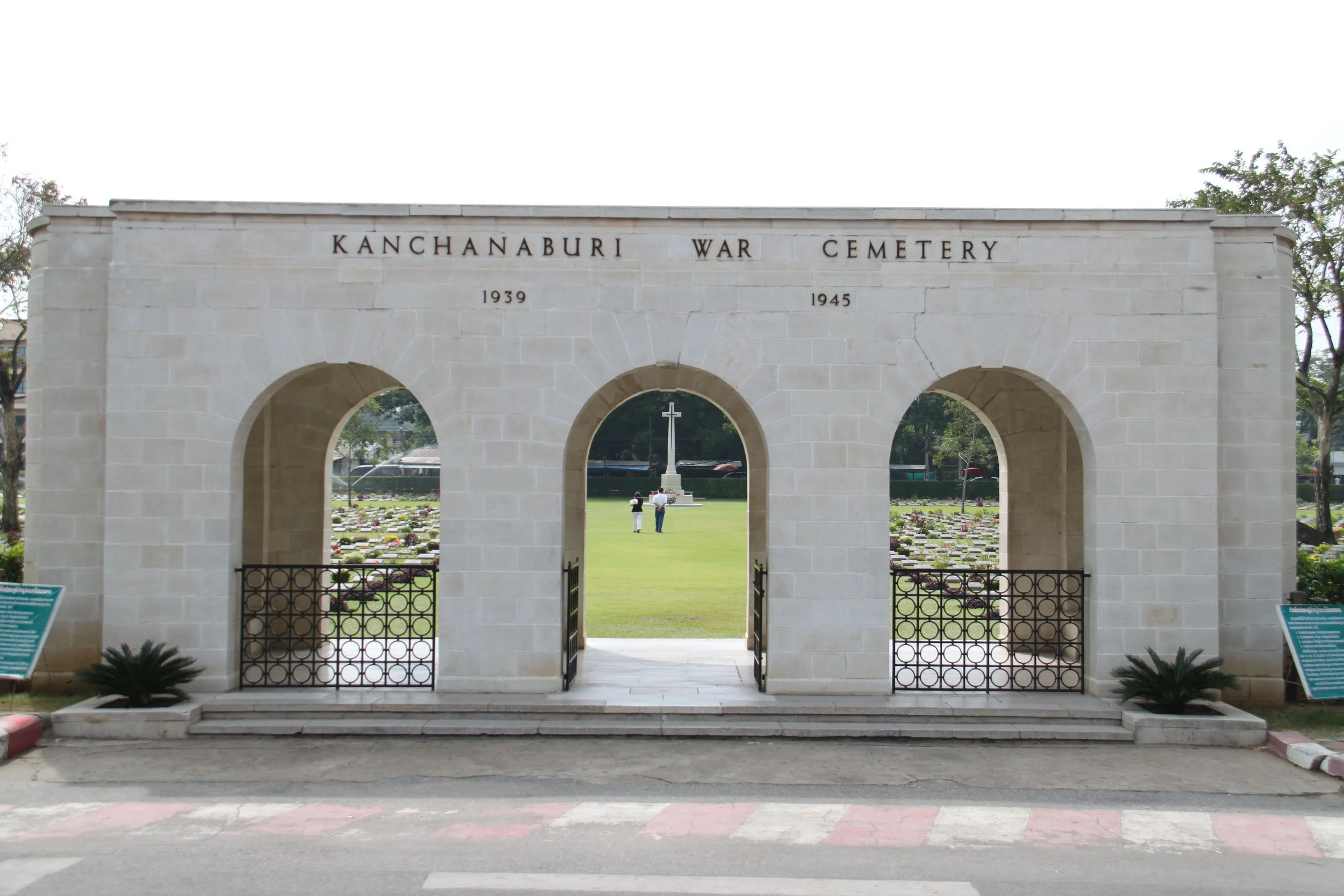
For anyone visiting the Kanchanaburi War Cemetery, it is not evident that the graves before them, have been relocated to this site after the end of the war.
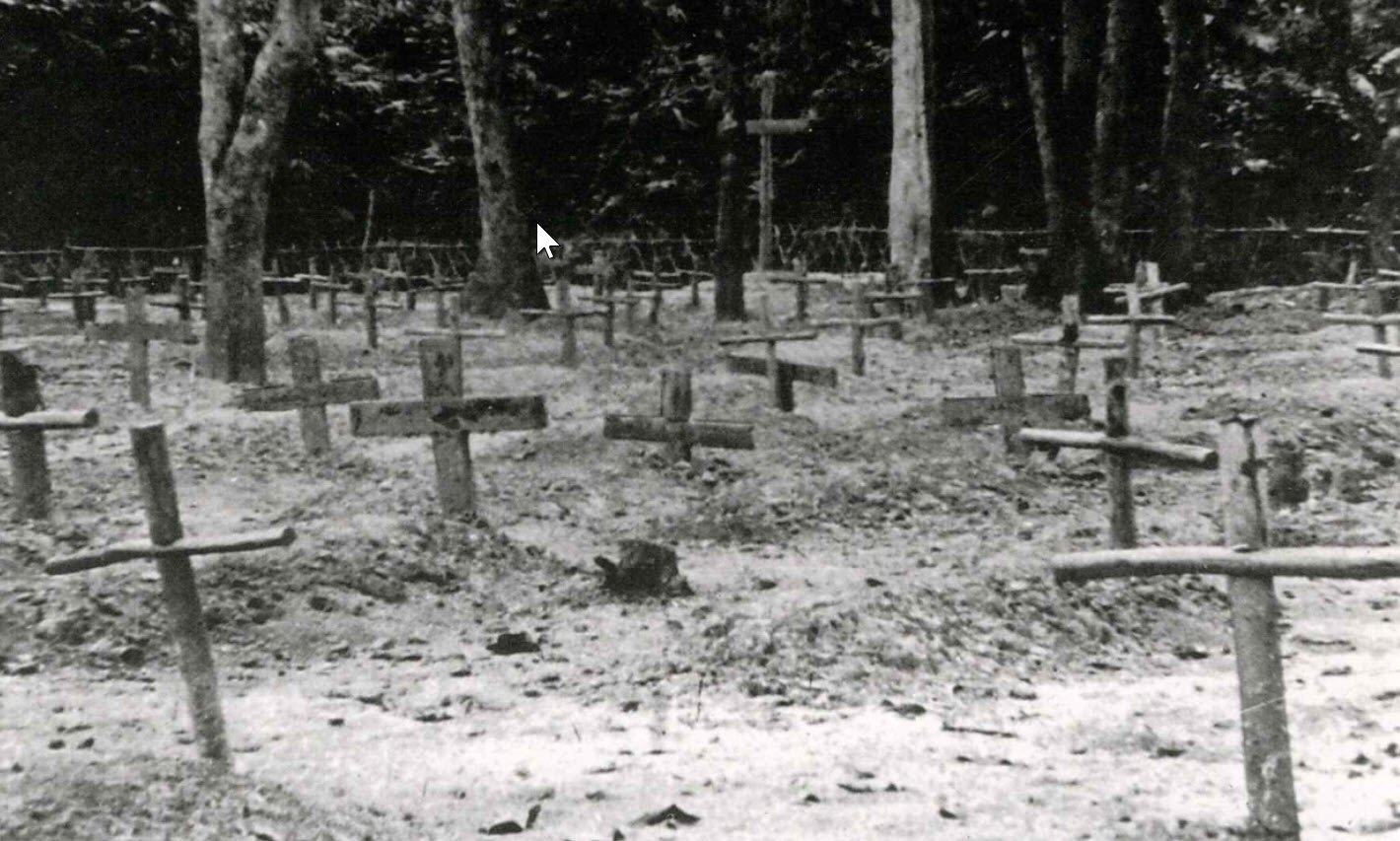
Graves of the Kui Yea Cemetery before recovery of remains
During the construction of the Burma-Thailand Railway, small, temporary work camps were built along the railway, to house the POWs working on the railway. Once a section was completed, the camp was abandoned and the POWs moved onto the next camp. As the POWs became weaker due to poor rations, disease became prevalent and the brutality of the Japanese guards increased, POW deaths also increased. With these deaths, small cemeteries were created beside the work camps. ‘Hospital’ camps were established by the allies and the Dutch, to aid the chronically ill from the work camps in the vicinity. (We are all familiar with the great doctor, ‘Weary’ Dunlop who led allied medical teams at hospital camps such as Tha Sao, Chungkai and Nakhon Pathom.) Without these hospital camps, many more than the final death toll of approximately 12,000 allied and Dutch POWs, would have resulted.
Allen Maxwell (Mick) Johnston, a relative and member of the Australian 8th Division, was part of the 5,000 strong ‘D’ Force which left Singapore for Thailand, in February 1943. ‘D’ Force travelled by train and then were fortunate to be trucked (some groups were made to march) to Tha Sao where they were split up and sent to various work areas and camps. Mick was part of ‘V’ Battalion and worked at Kinsaiyok, Prang Kasi and Hindat before becoming ill with dysentery. He was transferred to the Dutch hospital camp at Kui Yea where his condition continued to decline.
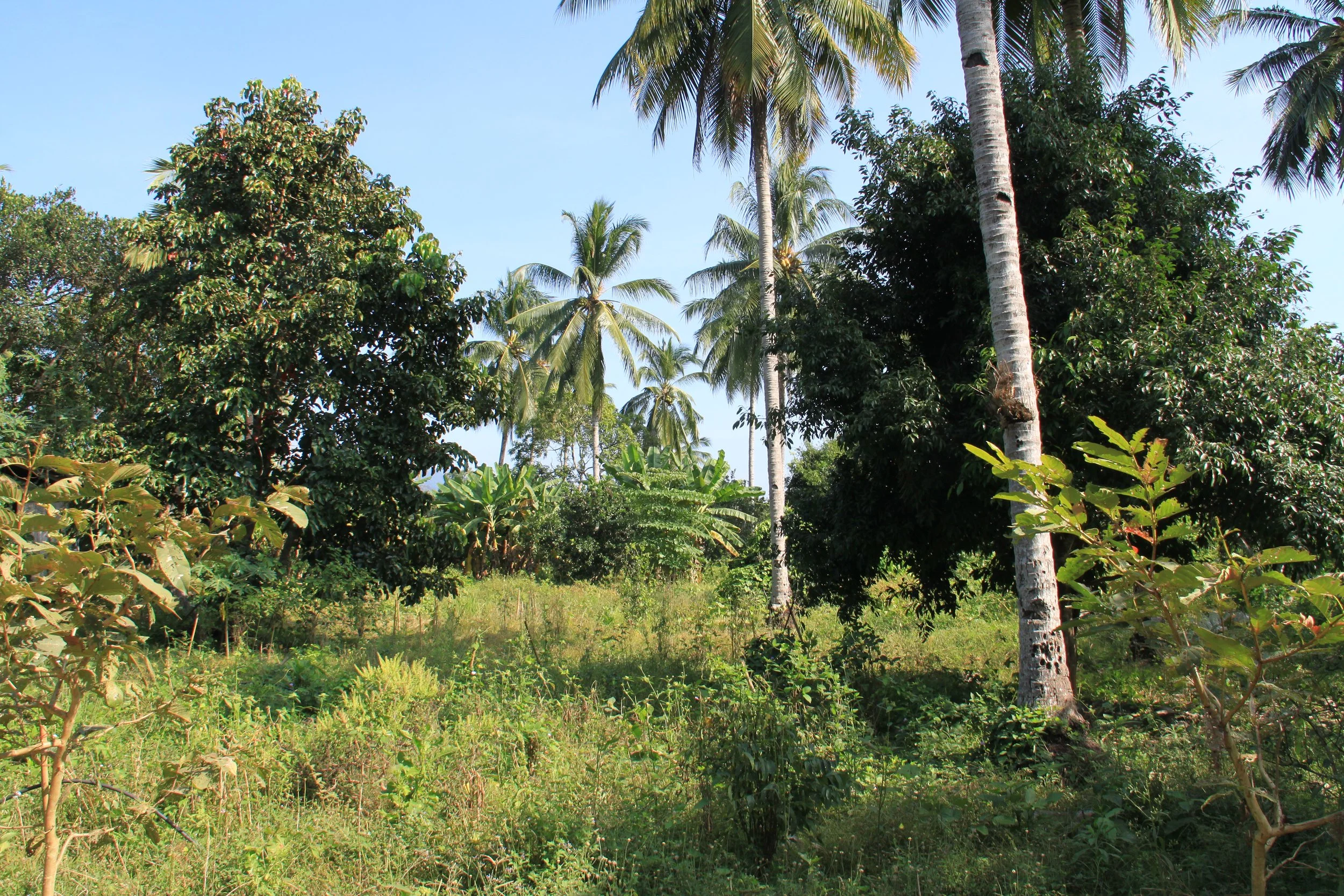
The original site of Kui Yea Cemetery (today)
About the same time, and co-incidentally, Edward Parker, who was in the same unit as Mick and like Mick had survived the Fall of Singapore, and was also part of ‘D’ Force, arrived at the hospital at Kui Yea suffering from malnutrition. Mick and Edward had been separated on arrival at Tha Sao with Edward working at Hintok. Edward’s condition continued to deteriorate as well.
The Dutch hospital at Kui Yea was created to treat the large Dutch POW population in the area. The Dutch had been captured in Java (now Indonesia) and then sent to Thailand to work on the construction of the railway. Like the allied POWs, the Dutch were also subject to the same harsh conditions. The hospital comprised qualified doctors with medical assistants. The medical assistants were mainly POWs considered too sick to work on the railway but able to undertake light duties. One of these ‘light’ duties was the digging of graves and burial of those who had died. As time progressed, and the health of the medical assistants became worse, they struggled to dig the graves required. So, became a macabre system where the timing of the death of a POW was estimated and graves would be dug according to that timing. Where more than one person was expected to die at about the same time, one large grave would be dug to hold everyone.
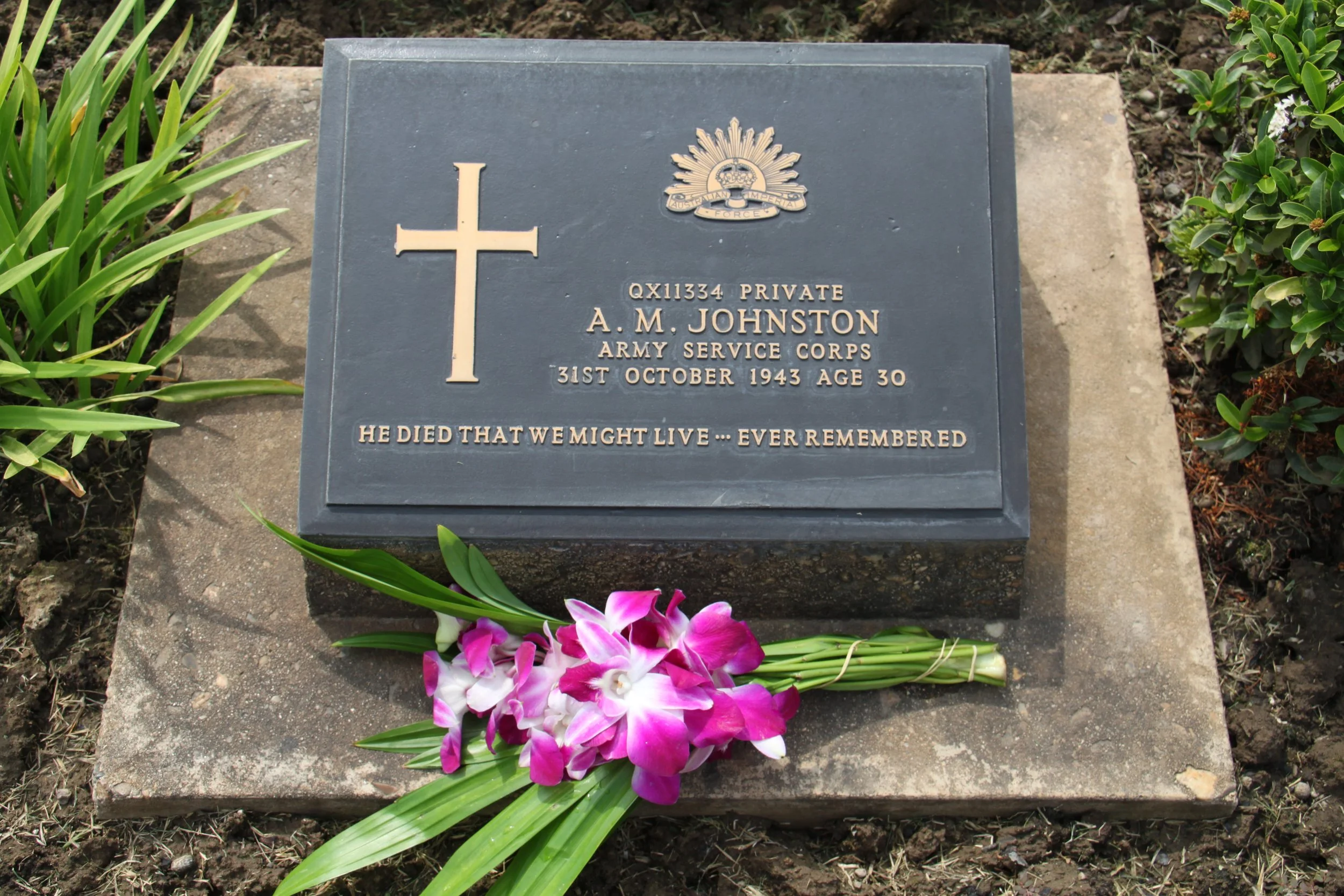
Mick Johnston’s grave at Kanchanaburi War Cemetery
In the case of Mick Johnston and Edward Parker, there were also four Dutch POWs expected to pass at the same time. A grave, large enough to hold six persons, was dug. On the 22nd and 23rd October 1943, the four Dutchman died and were placed in the grave awaiting Mick and Edward. Edward died on the 24th October and was laid with the Dutch POWs. However, Mick continued to defy predictions, but his situation was hopeless. The grave holding the five POWs was partly filled waiting for Mick. Something that would prove invaluable to Mick’s family decades later. On the 31st October 1943, a week later, Mick finally succumbed. He was buried on top of the dirt which covered the other five POWs and the grave was closed.
After the war was over, all the cemeteries along the railway were located and the remains of the POWs recovered. Those recovered on the Thailand side of the Burmese (now Myanmar) border were sent by rail, to the new cemetery in Kanchanaburi becoming the Kanchanaburi War Cemetery as we know it today. On the 2nd April 1946, Mick’s and Edward’s remains were reburied at the Kanchanaburi War Cemetery.
Mick’s grave reference is 1.O.74, while Edward’s is 3.E.42. Same grave at Kui Yea but Mick is buried in the Australian section (Section 1) and Edward buried in the Dutch section (Section 3). How could this be?
I mentioned before that it was a week from the time that the grave at Kui Yea was lightly covered, to when Mick died. When the recovery of the remains occurred, Mick’s remains were separate to the other five POWs and could be clearly identified. Unfortunately, because the other five, including Edward, had been buried together, each person could not be readily identified. Remember, this was the days before DNA testing was available. Because the five POWs comprised one Australian (Edward) and four Dutchman, the burial of the five POWs was made in the Dutch section of the Kanchanaburi War Cemetery and although each has their own headstone, they were buried together and the headstones represent their approximate burial location.
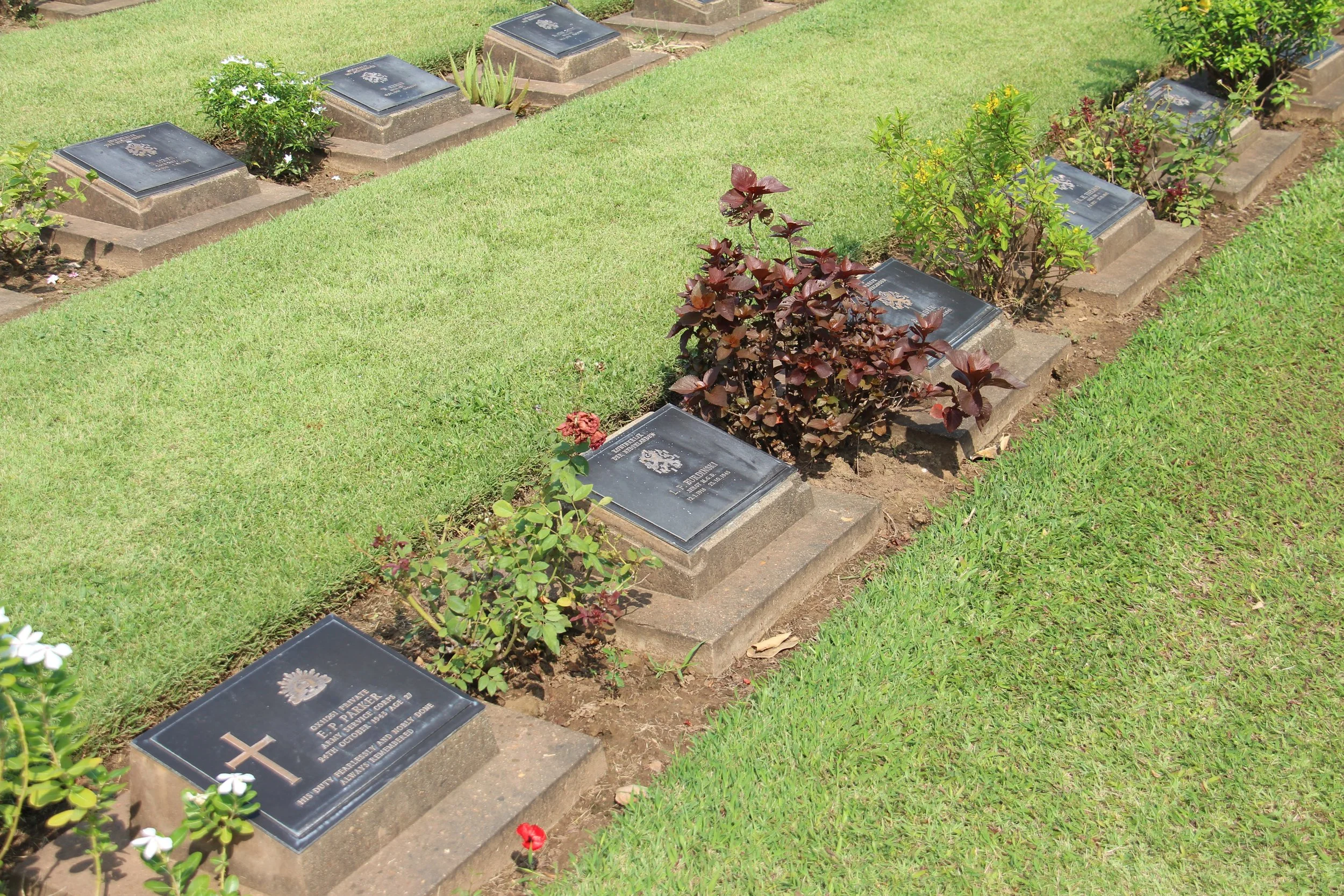
The headstones of the five POWs (Edward Parker is bottom left) in the Dutch Section of the Kanchanaburi War Cemetery
As a family, we are grateful that Mick did hold on for that extra time before finally passing. His grave is in the Australian section of the Kanchanaburi War Cemetery and he is buried under his headstone which is what Mick (and his family) would have wanted.
Rest in Peace:
1.O.74 Johnston AM (Mick)
3.E.42 Parker EP
3.E.43 Burdinski LF
3.E 44 van Dijk D
3.E.45 Tieland HKH
3.E.46 van Welsem AG
Source:
Allen Maxwell Johnston & Edward Patrick Parker:
Australian Army Service and Casualty Form
P.O.W. Record – Thailand-Burma Railway Centre, Kanchanaburi, Thailand