
What to Expect Visiting Hellfire Pass: A Respectful Visitor Guide
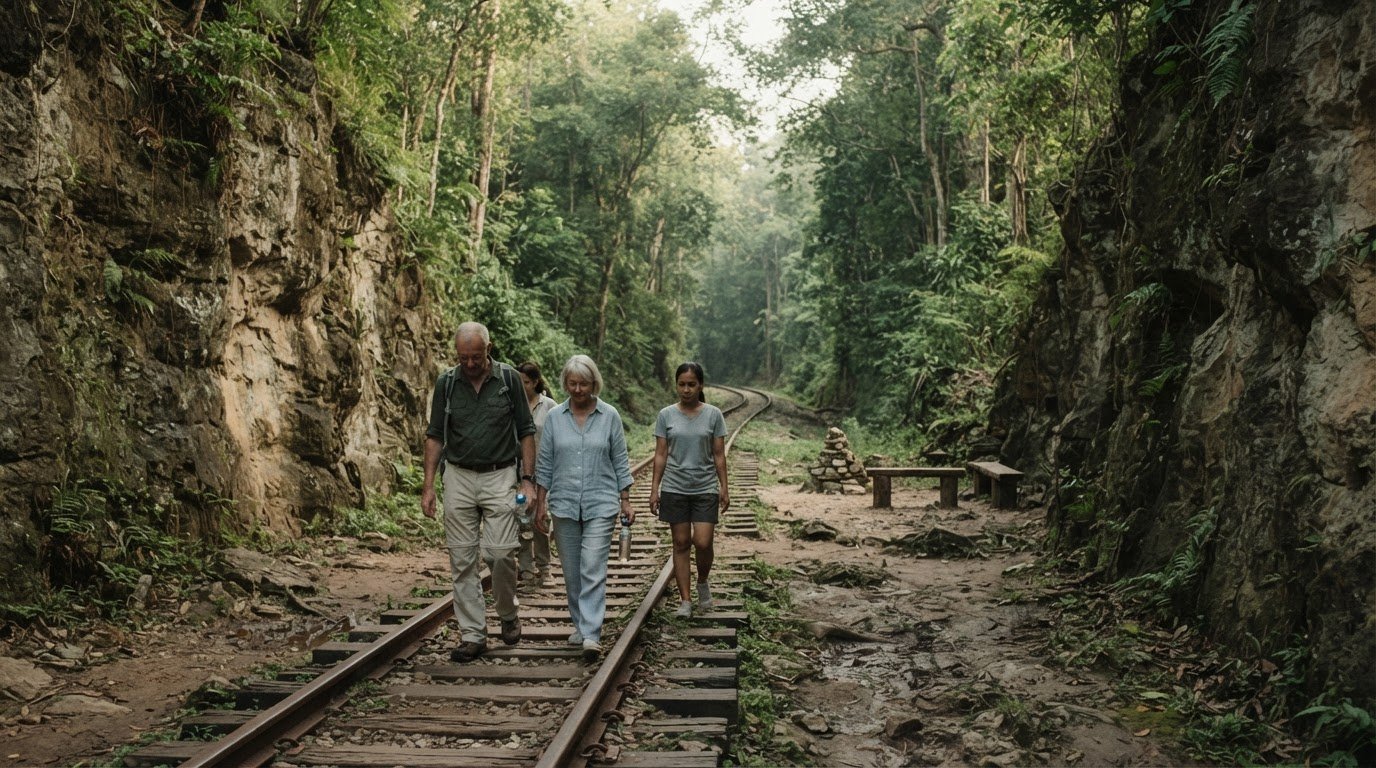
What does it mean to walk through a place shaped by suffering and remembrance? If you’re wondering what to expect visiting Hellfire Pass, prepare for more than a trail through the Thai landscape. A visit combines the Interpretive Centre, a walk along the railway cutting and time to reflect on the lives of Allied prisoners of war and Asian labourers who endured its construction.
It’s natural to wonder how demanding the walk will be and how to prepare. The shorter trail to the main cutting and memorial takes about 40 to 50 minutes return. The longer route follows the railway bed into the jungle and takes about three to four hours. Heat and slippery sections can add to the effort, so wear sturdy footwear and bring water.
This guide covers how to prepare, use the Interpretive Centre’s historical resources and choose a walk that suits your ability. It also explains how to move through the site with care. An escorted Burma-Thailand tour can add expert historical context, but whichever way you visit, leave time to listen, learn and remember.
Key Takeaways
- Know what to expect visiting Hellfire Pass, from its role as a place of remembrance to the care needed when exploring the site.
- Learn how the Interpretive Centre’s historical resources can deepen your understanding of the people who endured forced wartime labour.
- Use current official updates to plan around trail conditions, weather and your mobility before setting out.
- Prepare with suitable footwear, water and sun protection, then allow time to experience the site at a measured pace.
- Consider how an escorted Burma-Thailand tour can add historical context and connect the railway’s sites and stories.
What to Expect When Visiting Hellfire Pass for the First Time
Expect a visit that brings together historical interpretation, landscape and reflective walking. Hellfire Pass is not a conventional attraction or recreational trail. It is a place of remembrance, where the preserved railway cutting and surrounding paths invite visitors to consider the human cost of wartime forced labour.
Hellfire Pass is a railway cutting on the Thai-Burma Railway, built during the Second World War by Allied prisoners of war and Asian labourers under forced labour conditions. The name refers to the cutting’s appearance by torchlight as prisoners worked through the night. The Hellfire Pass Wikipedia article offers further background on its history and memorial significance.
A visit typically begins with the Interpretive Centre’s accounts and historical material, then continues outdoors to the cutting and walking trails. As of October 2026, the centre and walking trails are open daily from 9 am to 4 pm. The full site reopened on 8 October 2026 after a safety assessment following flooding. Access can change, so check current visitor information before travelling.
Begin at the Hellfire Pass Interpretive Centre
Start inside the centre. Its museum introduces the Thai-Burma Railway and the people who were made to build it through photographs, artefacts and personal accounts. These records help put the cutting in context, so it is understood as more than a striking feature in the landscape.
Free audio guides are available. Give yourself time to explore the material before heading outside. The stories and historical context can shape how the walk feels and what you notice along the route.
Prepare for a quiet, reflective experience
The atmosphere is generally solemn. Visitors move at different paces, pause at the memorial, or spend time reading and listening. There is no need to hurry from the centre to the cutting. A measured visit gives you space to absorb the accounts and recognise the people remembered here.
The green slopes and forest contrast sharply with the history described inside the centre. That change in setting can feel affecting, but the landscape should not eclipse the human story. Keep in mind the prisoners of war and Asian labourers who endured hunger, illness, exhaustion and violence during construction.
If you’re asking what to expect visiting Hellfire Pass, plan for both practical walking and an encounter with difficult history. Learn before setting out, move with care and leave a quiet moment to reflect before you go.
Understand the History and Human Stories Behind Hellfire Pass
Hellfire Pass is part of the Thai-Burma Railway, a wartime line built under Japanese military direction to support supply movements. Its strategic purpose came at a grave human cost: Allied prisoners of war and Asian civilians were forced to labour in brutal conditions. More than 250,000 Southeast Asian civilians and over 12,000 Allied soldiers worked on the railway, according to the historical information provided for this guide.
At the site, the cutting, the route and the Interpretive Centre’s accounts make the history tangible. Together, they show not only what was built, but what its construction meant for the people made to do the work. That connection is central to understanding what to expect visiting Hellfire Pass.
Read the landscape alongside the interpretation
The cutting gives physical context to the written and recorded history. As you walk, look at the scale and shape of the passage, then consider what the centre explains about the railway and the labour behind it. The landscape alone cannot tell the full story: the exhibits provide context, while the site helps you place that history. Take time to connect the two instead of treating the walk as a sequence of viewpoints.
Keep the human experience in focus. Historical interpretation explains the railway’s wider purpose, while individual accounts bring attention to the people who endured its construction. A name, recollection or personal detail can make a large historical subject more immediate without reducing it to a single story. Read carefully and allow different accounts to stand on their own terms.
Listen to testimony with care
Audio interpretation can offer personal testimony and further context as you move through the site. Listen where available, but you don’t need to complete every recording in one sitting. Pause between accounts. A moment of silence can help you absorb what you’ve heard and return your attention to the place around you.
These voices are historical testimony, not entertainment. Take your time rather than rushing through to cover more ground. Some visitors may want to listen to a full account; others may need a break before continuing. Both responses are understandable. The aim is to engage attentively, not to measure the visit by how much material you finish.
An expert guide can connect the cutting and personal accounts to the wider history of the Thai-Burma Railway. Historic War Tours’ fully escorted Burma-Thailand tours include Hellfire Pass, with historical commentary on Allied prisoners of war. This context helps place the site within a broader account while keeping attention on the people remembered there.
Choose a Hellfire Pass Walk That Suits Your Ability
Choose the walk that lets you engage with the site without pushing beyond your capacity. Current visitor information describes a shorter walk to the main cutting and memorial, and a longer route along the original railway bed. Heat, mobility, fitness and available time all affect how manageable each option may feel.
As of October 2026, both walking trails are open. Use the comparison below to plan, then check current official updates and visitor-centre guidance on the day. Conditions can change, and the time needed varies between visitors.
| Walking option | Distance and time | What to consider |
|---|---|---|
| Short walk to the main cutting and memorial | About 500 metres; around 40 to 50 minutes return | A shorter outing, but still consider the heat, surfaces and your comfort walking. |
| Long walk along the railway bed | About 2.6 kilometres; around 3 to 4 hours return | A longer, more demanding walk. Visitors must carry a free safety radio. |
Trail distances, estimated times and requirements are based on the current information available for the site. Verify official guidance before setting out.
Assess the walk before choosing a route
Before you start, consider how you manage uneven or potentially slippery surfaces, and how warm conditions affect your energy. Don’t judge your readiness by distance alone: a route that feels comfortable in cooler weather may take more effort in heat. Allow for pauses, and think honestly about your mobility and how long you want to spend on the trail.
Shape the visit around your capacity. Walk to the main cutting, continue farther if conditions and energy allow, or spend more time at the centre. A free golf buggy service is available for elderly visitors and people with physical limitations to access the main cutting. Follow the centre’s directions for using the service.
Know when to pause or turn back
Take breaks when needed, carry water and follow visitor-centre guidance about current trail conditions. If you feel unwell, stop and seek assistance rather than pressing on. On the longer route, keep track of your return time as well as the distance ahead, and follow instructions for carrying and using the safety radio.
A meaningful visit doesn’t depend on completing the longest walk. Time at the cutting, the memorial or the Interpretive Centre may be the more considered choice. Plan for a walk that respects both the conditions and your limits, and be ready to change your plans once you’re on site.

Prepare for Hellfire Pass: Conditions, Essentials and Respect
A considered visit begins before you arrive. Check current official information, assess the conditions, pack for the walk and leave enough time to move without hurry. Access arrangements and trail conditions can change, so recheck official visitor updates close to your visit and follow directions at the centre.
Good preparation supports a safer walk and leaves you more attention for the remembrance at its heart. Use this sequence to plan:
- Check: Review official updates for access, opening arrangements and trail conditions.
- Assess: Consider the forecast and whether the conditions suit your mobility, fitness and available time.
- Pack: Bring sturdy walking footwear, water and sun protection, such as a hat and sunscreen. Adjust what you carry to the day’s conditions.
- Plan: Allow time for pauses and reading, not just walking between points. Be ready to shorten your walk if conditions or your energy change.
Check current conditions and pack thoughtfully
Before setting out, confirm that the parts of the site you plan to visit are accessible and review current trail advice. Warm weather can make walking more demanding, while rain may affect footing. Choose shoes with a secure fit and grip, carry enough water for your planned walk and protect yourself from the sun. Don’t assume supplies or facilities will be available when you need them.
For a longer visit, plan how much time to give the walk and the Interpretive Centre. A measured schedule leaves room to pause, change your route or turn back if conditions call for it. This is especially useful when visiting with others whose walking pace or comfort may differ from yours.
Visit with consideration for the site
Hellfire Pass is a place of remembrance. Keep conversation quiet around memorial spaces, and give other visitors room to read, listen or reflect. Treat photography sensitively. Follow posted guidance, avoid interrupting others’ moments of reflection, and consider whether taking a photograph is appropriate in a particular space.
There’s no need to move quickly from one feature to the next. Give the interpretation your attention, pause when you need to and leave time for a quiet moment before departing. Prepare for the practical demands while keeping the site’s purpose in view.
For visitors who value expert historical context throughout a supported group journey, explore escorted Burma-Thailand tours that include Hellfire Pass and interpretation of Allied prisoners of war experiences.
Add Historical Context to Your Hellfire Pass Visit
You can explore Hellfire Pass independently or as part of an escorted visit. The Interpretive Centre’s exhibits and audio guide give self-guided visitors material to explore at their own pace. An escorted visit adds a guide’s commentary and a group journey through significant sites connected with the Thai-Burma Railway. Either way, the site’s solemn purpose remains central. The difference is how historical context is delivered and how the visit is supported.
Interpretation can connect the cutting’s physical scale with the railway’s wider history and the experiences of those forced to build it. A guide can provide context while leaving time for visitors to consider the accounts and respond in their own way.
What an expert guide can add
The cutting is one part of a much larger history. Expert commentary can place it within the Thai-Burma Railway story and explain its connection to the experiences of Allied prisoners of war. That wider frame can make details at the site easier to understand, even if you arrive without extensive historical knowledge.
Guidance needn’t crowd out personal reflection. Listen to the explanation, look again at the place it describes, then pause before moving on. Historic War Tours’ expert guides provide historical commentary on Allied prisoners of war as part of fully escorted military-history group tours. This brings interpretation into the journey while preserving space for quiet attention.
Continue the journey with an escorted tour
Self-guided visitors can choose their own pace through the centre and use the available resources to shape their understanding. An escorted group experience offers a different structure: a guide provides historical interpretation across connected sites, and the group encounters them as part of a wider heritage journey. The value lies in context and continuity, not in trying to see as much as possible.
Historic War Tours’ Burma-Thailand tours include Hellfire Pass and guided historical context about Allied prisoners of war. As an Australian-owned operator of fully escorted military-history group tours across Southeast Asia, the company brings together significant sites connected with the railway and expert commentary. The site is part of a wider history, and a guide can help draw those connections into view.
Whether you visit independently or with a guide, give the accounts room to settle. If a supported group journey with historical interpretation suits the way you want to learn, you can explore Historic War Tours’ military-history tours in your own time.
Carry the History Forward
A visit to Hellfire Pass can stay with you beyond the walk itself. Give the stories time to settle, and consider how you might continue learning about the people remembered there. Knowing what to expect visiting Hellfire Pass is one step; carrying its history forward through thoughtful attention is another.
If you’d like to explore this history across a wider heritage journey, Historic War Tours offers fully escorted military-history group tours. Its Burma-Thailand tours include Hellfire Pass and expert historical commentary on Allied prisoners of war.
Explore Historic War Tours’ escorted Burma-Thailand journeys and continue learning about the railway’s history.
Frequently Asked Questions
Is Hellfire Pass suitable for children?
It may be suitable, depending on the child’s age, understanding and ability to manage a solemn visit and an outdoor walk. Before going, explain the site’s wartime history in age-appropriate language, including that people were forced to build the railway under harsh conditions. Check current visitor guidance, and be prepared to pause or leave the trail if a child feels tired or overwhelmed. Children may respond differently to the exhibits and accounts.
Can visitors take photographs at Hellfire Pass?
Follow signs and instructions from centre staff, as guidance may vary between areas. Around memorials, take care not to interrupt others who are reflecting. A quiet photograph of the landscape is different from posing or behaving in a way that diminishes the site’s significance. Pause and consider the setting before taking a photograph, and respect other visitors’ privacy.
Are toilets or other visitor facilities available at Hellfire Pass?
Facilities and access arrangements can change, so check the Interpretive Centre’s current official visitor information before travelling. Plan comfort needs before starting the walk, especially if you expect to spend time on the trail. Don’t assume amenities are available at every point along the route. If you’re visiting as part of a longer day out, factor in where you may need a break.
Do I need to book before visiting Hellfire Pass?
Booking requirements may differ between ordinary visits and organised group visits, so check the Interpretive Centre’s current official guidance before setting out. If you’re travelling with a group, allow time to organise the visit and follow any instructions published for group access. Don’t assume arrangements for a private visit apply to groups. Confirming the current process in advance can help you plan the day.
Is the Hellfire Pass Interpretive Centre open every day?
Opening days and hours can change, including around public holidays or operational disruptions. Check the centre’s official information close to your visit rather than relying on older travel advice. This is especially important if your itinerary has little flexibility or you’re arranging transport around the visit. If access information changes, adjust your plans before setting out.
What happens if I cannot complete the Hellfire Pass walk?
You can still have a meaningful visit without completing the longest route. Spend more time with the Interpretive Centre’s material, or choose a shorter section if current access guidance allows. Respect your comfort, pause when needed and turn back if you feel unwell or conditions become difficult. What to expect visiting Hellfire Pass isn’t defined by distance covered; a thoughtful visit can include learning, quiet attention and time to reflect.