
Anzac Day Dawn Service at Hellfire Pass: History, meaning and what to expect
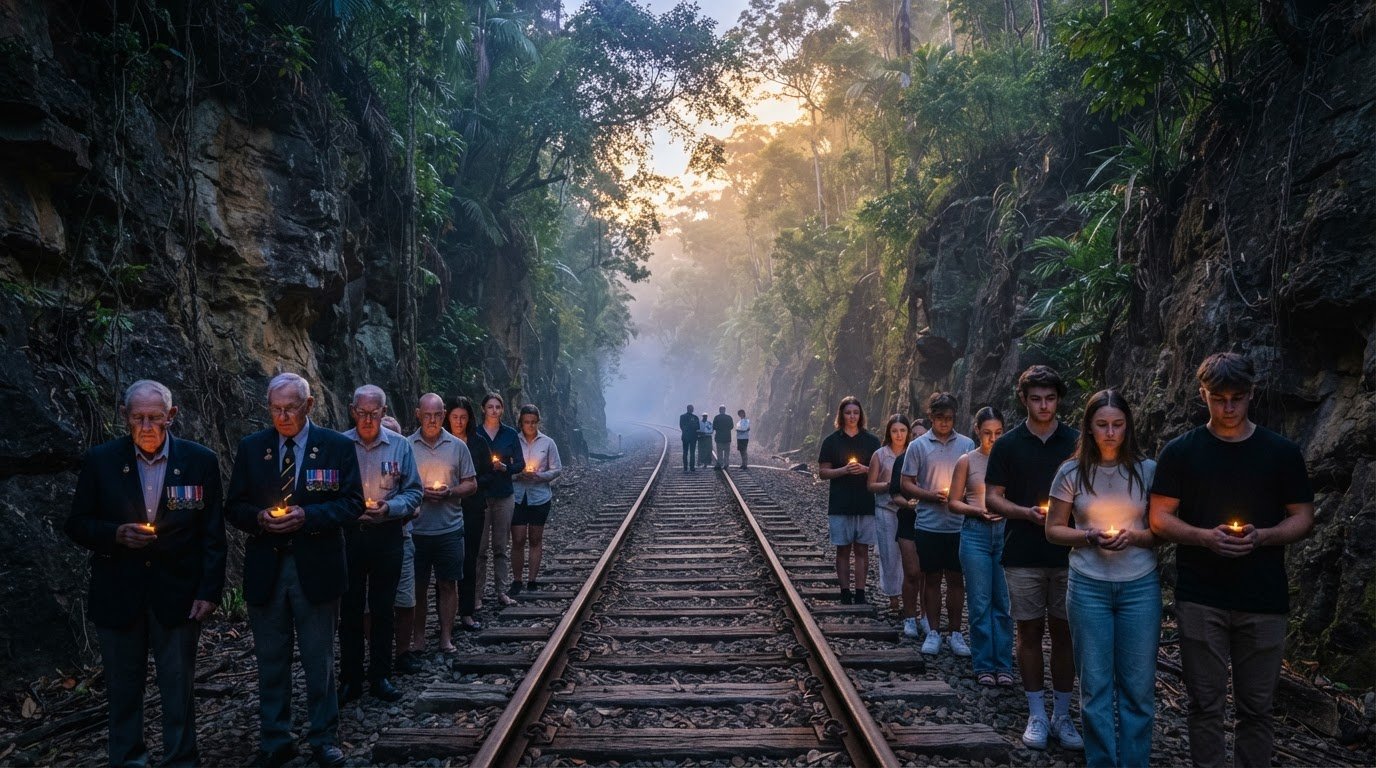
What does it mean to mark Anzac Day at a place shaped by the labour and suffering of prisoners of war? The Anzac Day dawn service Hellfire Pass is more than a ceremony in a striking setting. It takes place at Konyu Cutting, where a group of Australian prisoners began work on this difficult section of the Thai-Burma Railway on Anzac Day in 1943.
Hellfire Pass carries the memory of Allied prisoners of war and Southeast Asian civilian labourers forced to build the railway. The name recalls the fires and torches that lit night work in the cutting.
This guide explains the site’s significance, what to expect from the service and how to prepare for the early start and walk to the cutting. It also explores how guided historical context can connect the ceremony with the wider railway heritage landscape, helping you approach the journey with care and understanding.
Key Takeaways
- Understand how the Anzac Day dawn service Hellfire Pass connects remembrance with the history of the Thai-Burma Railway.
- Learn why the ceremony is more than a memorial visit and how its setting can shape a reflective experience.
- Prepare by checking current official guidance, planning your journey and packing for an early start.
- Show respect through considerate conduct and by following the service organisers’ directions.
- See how an escorted Anzac journey and guided historical commentary can place the service within the wider railway heritage landscape.
Why the Hellfire Pass Anzac Day dawn service matters
An Anzac Day dawn service is a public act of remembrance. People gather to honour those who served and those who died in war, and to reflect on the human cost of conflict. At Hellfire Pass, remembrance is inseparable from the Thai-Burma Railway, built during the Second World War through forced labour under brutal conditions.
The Anzac Day dawn service Hellfire Pass is not simply a ceremony at a memorable location or a stop on a heritage itinerary. The cutting connects the commemoration directly to the people whose labour and suffering shaped this place. A group of Australian prisoners of war began work on this section on Anzac Day in 1943.
Hellfire Pass connects Anzac remembrance with the experiences of prisoners of war and civilian labourers forced to build the railway. Its history calls for attention to all those affected, not only the people whose stories are most familiar to Australian visitors.
What makes Hellfire Pass a place of remembrance?
The cutting was carved through rock by hand under wartime captivity. Australian and other Allied prisoners of war endured forced labour, hunger, illness and violence across the railway project. Southeast Asian civilian labourers, often referred to as romusha, were also compelled to work and suffered greatly. Their experiences are an essential part of the history remembered here. For more on the cutting’s construction, name and memorial, read this account of the history of Hellfire Pass.
What does an Anzac Day dawn service commemorate?
The service brings people together to remember, reflect and pay tribute. The dawn setting provides space for that shared purpose, with the cutting itself as a reminder of the history behind the ceremony. This is a solemn observance, not a display of military spectacle. Visitors can honour those who served by listening, reflecting and giving the occasion their attention.
Understanding the history can change how you experience the site. Rather than treating the cutting as scenery, consider what it represents: lives subjected to coercion, loss and hardship, and the responsibility to remember them with care.
The history behind Hellfire Pass and the Thai-Burma Railway
Hellfire Pass is one section of a much larger wartime railway project. The 415-kilometre Thai-Burma Railway connected Thailand with Burma, now Myanmar. Japanese wartime authorities forced Allied prisoners of war and Southeast Asian civilians to build it under severe conditions, including illness, exhaustion, malnutrition and violence. The cutting was one worksite within a vast system of forced labour, not an isolated episode.
The National Museum of Australia’s account of the Thai-Burma Railway provides wider context for its construction and human cost. Estimates indicate that around 60,000 Allied prisoners of war and more than 250,000 Southeast Asian civilian labourers were forced to work on the railway. About 12,619 Allied prisoners of war and more than 90,000 civilian labourers are estimated to have died. These figures show the scale of the loss, while each person’s experience remains individual.
How did Hellfire Pass become part of the railway story?
At Konyu Cutting, workers cut through rock to make way for the railway. Australian prisoners of war began work on this difficult section on Anzac Day in 1943. The cutting is about 75 metres long and 25 metres deep. Its physical form makes the labour visible, but it represents only one part of the railway route and the many worksites where people were forced to labour.
Whose experiences should visitors remember?
Allied prisoners of war included Australians, British and Dutch men, among others. They endured forced labour and harsh conditions across the railway project. Southeast Asian civilians, often called romusha, were also coerced into the work and suffered profound hardship. Their histories are not secondary to the railway’s story. A balanced understanding recognises both groups without assuming their circumstances or experiences were identical.
The Anzac Day dawn service Hellfire Pass gains historical depth when visitors understand this wider setting. The ceremony honours service and sacrifice, while the site also prompts reflection on the civilians whose labour and suffering shaped the railway. Historical commentary can connect the cutting with other railway heritage locations and the broader record of wartime captivity.
For travellers seeking that wider context, escorted Burma-Thailand journeys connect Hellfire Pass with other railway heritage sites as part of a considered commemorative journey.
What the dawn service can offer beyond a visit to the memorial
A memorial visit and a dawn service offer different ways to experience Hellfire Pass. A daytime visit may allow more time to read, walk and explore at your own pace. The Anzac Day dawn service Hellfire Pass brings people together for a shared act of remembrance within the landscape it commemorates. It is more than another attraction to tick off an itinerary.
People will take different things from attending. Some may reflect on family histories or military service; others may focus on those who endured forced labour across the railway. There is no single response visitors should feel. Listening, observing and allowing space for reflection can be enough.
Is the dawn service only a ceremonial event?
The ceremony gives remembrance a shared structure, while the cutting provides a tangible historical setting. The site also invites visitors to consider the human experiences connected to the railway. Specific readings, tributes and other programme elements can vary by year, so check the current programme rather than assuming the same sequence will apply each time.
This is a solemn occasion, not a performance. You can take part respectfully without feeling obliged to display or describe a particular emotion.
How does the experience differ from a daytime heritage visit?
At dawn, the focus is on gathering and commemorating. A daytime visit may offer a different pace for exploring the site and its interpretation. Neither experience replaces the other. Historical commentary can connect what visitors see at Hellfire Pass with the wider railway story and the experiences of prisoners of war and civilian labourers. It adds context while leaving each visitor to make their own sense of the history.
Practical conditions matter. Reaching the cutting from the Interpretive Centre involves a walk of about 20 minutes over stairs and uneven ground. Visibility at dawn differs from a daytime visit. Access arrangements, site conditions and the service programme can change, so use current official visitor guidance when planning. Weather and other safety concerns may affect access.
Approach the service as a commemoration first, then allow time to understand the place around it. Guided historical commentary before and after the ceremony can connect the moment of remembrance with the wider heritage landscape without reducing the experience to sightseeing.

How to prepare respectfully for the Hellfire Pass dawn service
Preparation helps you arrive with care and focus. The service takes place early, and reaching the cutting involves stairs and uneven ground. Conditions and arrangements can change, so plan around current official guidance rather than relying on details from an earlier year.
What should visitors check before travelling?
Start with current service guidance from the Australian Embassy in Thailand and the Hellfire Pass Interpretive Centre. Check the service time, public access arrangements, transport options and notices about the site or walking trail. For 2027, the service is scheduled to begin at 5.30 am, and the site is expected to open at 3.00 am. Recheck official information before departure because arrangements may change.
Plan around the early start. Allow enough time to reach the site and follow arrival instructions. Review current guidance about access and mobility support before travelling, particularly if stairs or uneven paths may be difficult. Access can change in unsafe conditions, including after heavy rain.
How can visitors attend with care and respect?
Choose modest clothing for a solemn commemoration and practical footwear for uneven ground. The early hour does not remove the heat and humidity, so prepare for warm conditions. A small torch can help on the walk before daylight, and insect repellent may be useful. Follow the organisers’ directions, keep conversation quiet and give the ceremony your attention.
Preparation checklist: confirm current official service and access guidance, plan transport and an early arrival, wear modest clothing and sturdy footwear, and pack water, insect repellent and a small torch as appropriate.
Keep your plans flexible and follow current instructions about what to bring and where to walk. Access, mobility support and the programme may differ from year to year. On an escorted journey, organised travel and historical commentary help you focus on the commemoration and its context.
Prepare for the service as an act of remembrance, not simply an early start on a travel itinerary. Explore escorted Anzac Day journeys that connect the service with Hellfire Pass and the wider railway heritage landscape.
Make the Hellfire Pass service part of a considered Anzac journey
The Anzac Day dawn service Hellfire Pass can be part of a broader journey through the railway’s heritage, rather than a brief visit in isolation. An escorted military-history itinerary connects the commemoration with guided visits to Hellfire Pass and other Thai-Burma Railway heritage sites. Each location adds context to the landscape and the people whose experiences it holds.
What can an escorted commemorative journey add?
Travelling with a group and a military-history guide can help visitors follow the connections between sites. Commentary before the service can establish context; afterward, it can place the ceremony within the wider record of wartime captivity and forced labour. This guidance does not prescribe how anyone should feel. It supports informed remembrance and leaves room for personal reflection.
A fully escorted journey differs from a self-guided visit. You travel as part of an organised itinerary, with historical commentary and guided site visits. This structure helps explain how individual locations relate to a larger history, rather than presenting Hellfire Pass in isolation. Review the itinerary details to understand which sites and activities are included.
Explore a guided Anzac Day journey
Historic War Tours is an Australian-owned operator of fully escorted military-history journeys in Southeast Asia. Its Anzac Day journeys include dawn services and guided commemorative visits, while Burma-Thailand tours visit Hellfire Pass and Thai-Burma Railway locations. Guided commentary covers the experiences of Allied prisoners of war, helping travellers approach these places with historical context before and after the commemoration.
This approach treats travel as more than a sequence of stops. It gives visitors time to learn, observe and remember, while recognising that no itinerary can capture every person’s experience or determine what the service will mean to each attendee.
To explore a guided commemorative journey, view Historic War Tours’ escorted military-history travel in Southeast Asia.
Carry the remembrance forward with understanding
The Anzac Day dawn service Hellfire Pass brings commemoration into direct conversation with the history of the Thai-Burma Railway. Understanding the experiences of Allied prisoners of war and Southeast Asian labourers helps place the ceremony within a wider human story. The service is a time to remember, not simply another memorial stop.
Attending thoughtfully begins with preparation: check current official guidance, plan for the early start and walking conditions, and follow the organisers’ instructions. The ceremony and a daytime heritage visit offer different ways to engage with the site. Guided historical commentary can connect Hellfire Pass with the broader railway landscape.
Historic War Tours leads fully escorted group journeys focused on military history. Anzac Day itineraries include dawn services and guided commemorative visits, with commentary on Allied prisoners of war experiences. Explore Historic War Tours’ escorted Anzac Day journeys to plan a trip shaped by history and remembrance. Wherever you attend, bring care, curiosity and respect to the act of remembering.
Frequently Asked Questions
When is the Anzac Day dawn service at Hellfire Pass?
Anzac Day is commemorated on 25 April each year, but the service start time and practical arrangements at Hellfire Pass can vary. The date is fixed; the programme is not. Before travelling, consult current official event information for that year, including access instructions and updates. This helps you distinguish the annual commemorative date from changeable event arrangements.
Where is the Hellfire Pass dawn service held?
The service is associated with Hellfire Pass Memorial in Thailand, within the Thai-Burma Railway heritage landscape. The commemoration takes place at a site connected to the railway’s wartime construction. Confirm the official venue and access details for the relevant year, as visitor arrangements can change. Follow the directions issued for the event.
Can visitors attend the Hellfire Pass Anzac Day dawn service?
Attendance arrangements depend on the official programme and site access requirements for that year. Check current authoritative event information for registration requirements, entry arrangements and any capacity limits. Previous years’ arrangements may not apply, so review the latest guidance before travelling.
What should I wear to the Hellfire Pass dawn service?
Choose respectful, practical clothing for a solemn outdoor commemoration before dawn. Conditions can differ, so check current official visitor guidance and prepare accordingly. Wear footwear suited to the walking required under current site arrangements. Modest clothing and comfortable shoes can help you remain attentive during the service. Follow any specific instructions from organisers.
Is visiting Hellfire Pass physically demanding?
The visit may involve walking, and the route and accessibility conditions depend on service arrangements and current site conditions. Review official accessibility guidance before travelling, especially if you have mobility needs or use a walking aid. Current information can help you decide what support or preparation may be appropriate.
What happens at the Hellfire Pass dawn service?
The service is a solemn Anzac Day commemoration in a significant wartime heritage setting. Its programme, timing and ceremony elements may change from year to year, so check current official event information rather than assuming a particular sequence of readings or speakers. Attend with care, listen to organisers’ instructions and allow space for collective remembrance. The focus is commemoration, not spectacle.
How can I understand the history before attending the service?
Read about the Thai-Burma Railway, Hellfire Pass and the experiences of Allied prisoners of war and Southeast Asian labourers using reliable heritage sources. Keep historical claims grounded in documented evidence and recognise that different groups experienced forced labour in distinct ways. If the service is part of an escorted commemorative journey, guided military-history commentary can add context before and after the ceremony, connecting the memorial with the wider railway story.