
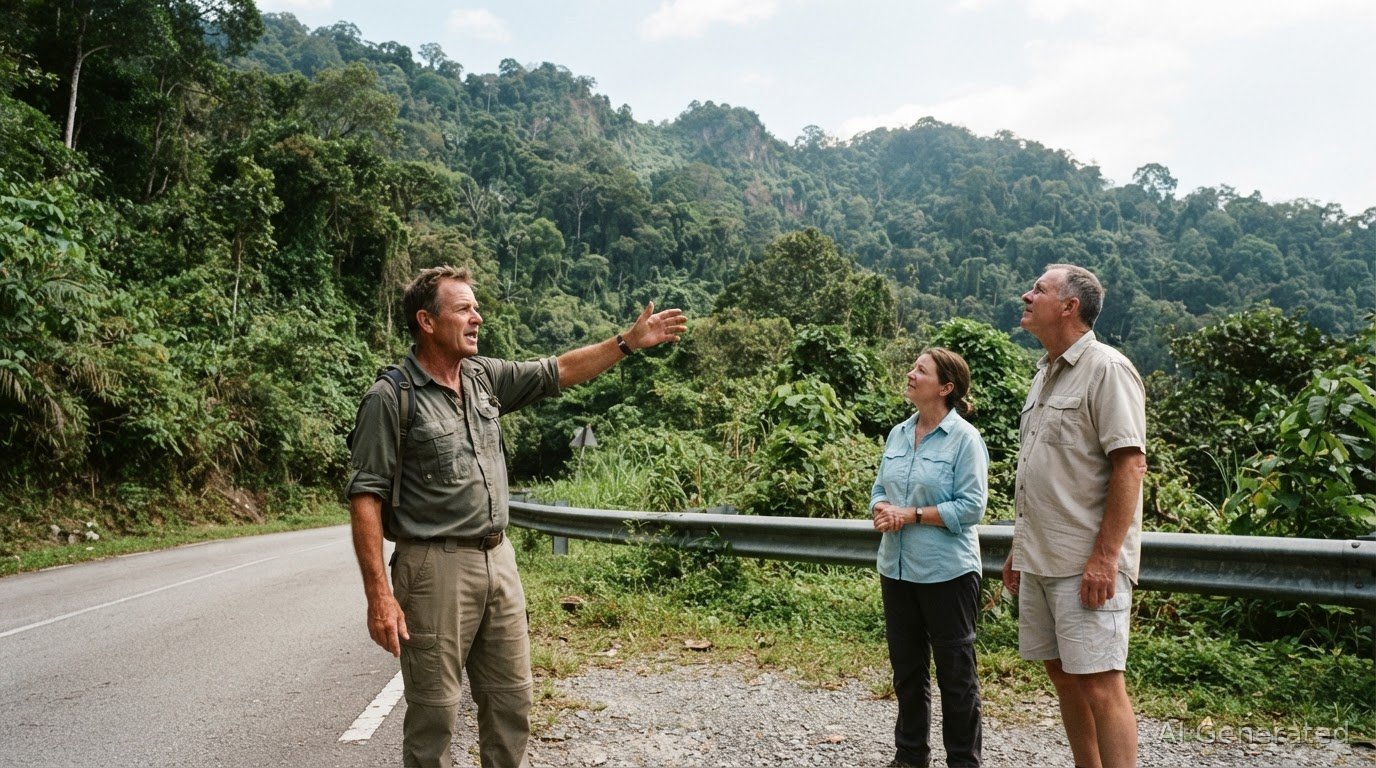
A battlefield journey should do more than name the places where fighting took place. Guided WWII tours in Malaysia bring the Malaya campaign into focus through visits to significant sites and the history that connects them. One route takes in Jitra, Gerik, Kampar, Gemencheh and Parit Sulong, then ends at Muar, tracing ground where Australian and Allied forces faced the Japanese advance.
That context matters: the landscape alone cannot explain the decisions, losses and civilian lives shaped by the campaign. This guide explains what to expect from a battlefield-led tour, how escorted group travel differs from a more private journey, and what to consider when choosing a trip from Australia. You’ll also learn how to approach Malaysia’s campaign sites with understanding and respect.
Key Takeaways
- Place the Malaya campaign in context by learning about the 8th Australian Division and its limited 33 days of operational experience in the Second World War.
- Understand how an escorted battlefield journey connects historic locations with the events that unfolded across them.
- Weigh the different rhythms of group and private travel to find an approach that suits how you want to explore Malaysia’s war history.
- Explore a Malaysia tour when you’re ready to follow the campaign’s history through its key sites with care and reflection.
Australian tour leaders and war-history expertise
For Australian travellers, a knowledgeable leader can connect a battlefield’s terrain with the decisions made there. Rod Margetts brought a 31-year military career to battlefield guiding, offering visitors a practical perspective on military history. His experience helps place unit movements and operational choices within the wider human story.
In Borneo, the history crosses Sabah, Labuan and Sarawak. Japanese forces invaded Borneo in January 1942, and Japanese rule lasted three years. Australian I Corps carried out amphibious assaults during the Borneo Campaign from 1 May to 21 July 1945. These allied operations give a journey a clear framework: examine occupied places, changing campaign objectives and the human cost of military action. A museum visit can add artefacts and local interpretation, while time at campaign sites shows how geography shaped movement.
Penang offers another distinct chapter. Japanese forces began their invasion on December 8, 1941; the occupation officially began on December 19 and lasted 44 months, from 1941 to 1945. These dates distinguish the initial advance from the period of occupation, helping visitors understand the island’s wartime experience.
At the Sandakan memorial, visitors can reflect on the region’s prisoner-of-war history. Keep voices low, follow site instructions and treat graves and memorials as places of remembrance, not props. Respect local customs and religious practices. At Malaysia’s WWII memorials, ask permission before photographing people and observe any displayed restrictions.
Battlefield guide and escorted-tour format
An escorted itinerary gives each stop a place in the campaign’s story. Guides provide historical context on the battles and service history of regional campaigns, helping travellers connect military events with the people affected. For Australian groups, a shared itinerary can support discussion and remembrance, rather than treating historic sites as a checklist.
The wider Pacific theatre includes distinct histories, from Malaysia to the Philippines and Papua New Guinea. A Philippines-focused WWII journey should follow its own campaign story, not assume events unfolded as they did in Malaya. In Borneo, the 2026 Operation Oboe prisoner-of-war tour was scheduled for 7 to 17 June. That past itinerary shows how an escorted journey can centre on a particular operation and its consequences. For Australians who wish to complement Pacific military history with broader regional exploration, Best of PNG provides curated cultural and adventure tours showcasing local traditions and festivals.
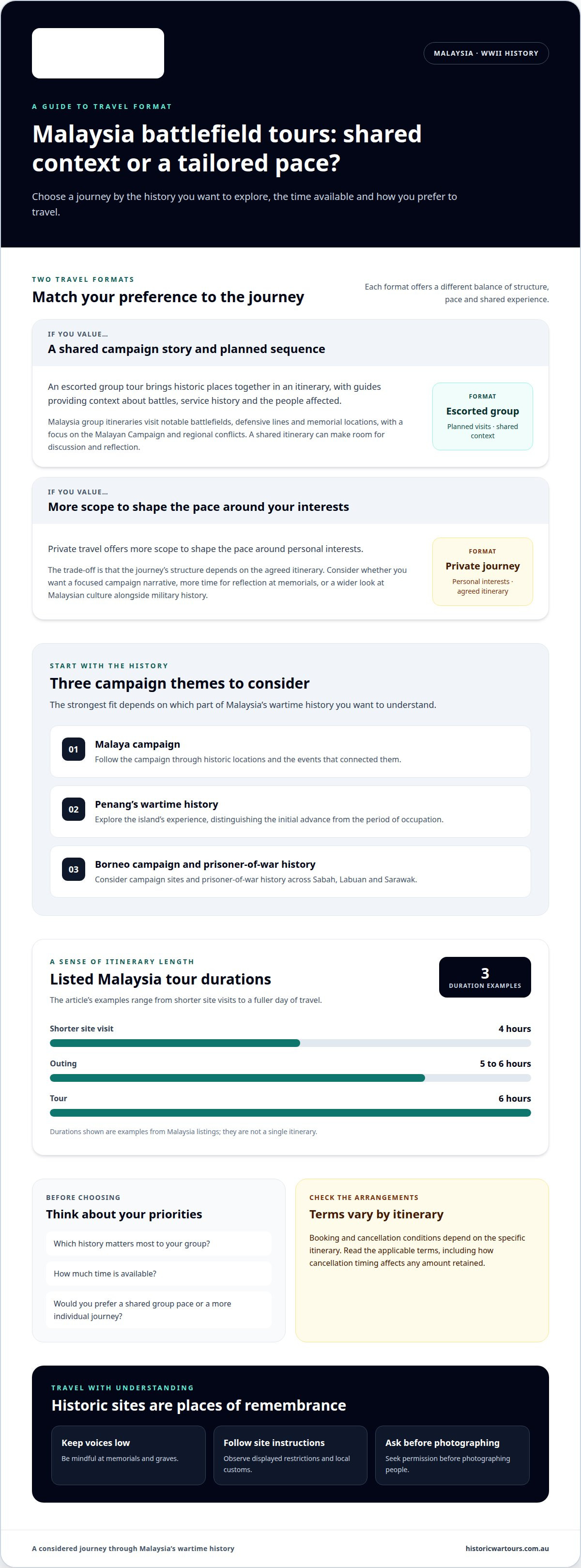
Tour durations depend on the itinerary. Malaysia listings include visits lasting four hours, outings of five to six hours, and a six-hour tour. These provide a useful sense of how a shorter site visit differs from a fuller day of travel.
An escorted tour combines planned travel between historic places with context about the campaign and its sites. This can help travellers understand how locations relate to one another, rather than seeing them as isolated stops. It also gives a group a shared framework for discussion and reflection.
Booking and cancellation conditions depend on the specific itinerary. Read the applicable terms before committing, including how cancellation timing affects any amount retained. This helps Australian travellers understand the arrangements before setting out on a commemorative journey.
Escorted group and private Malaysia tours
Guided WWII tours in Malaysia can follow the Malaya campaign, Penang’s wartime history or Borneo’s prisoner-of-war and campaign sites. The strongest fit depends on the history you want to understand, the time available and whether you prefer a shared group pace or a more individual journey.
An escorted group tour suits travellers who value shared historical context and a planned sequence of visits. Historic War Tours’ Malaysia Tours take groups to notable battlefields, defensive lines and memorial locations, with itineraries focused on the Malayan Campaign and regional conflicts. This approach helps place each site within the wider history and makes room for shared reflection.
Private travel offers a different balance: more scope to shape the pace around personal interests, with the trade-off that the journey’s structure depends on the agreed itinerary. Consider whether your priority is a focused campaign narrative, time for reflection at memorials, or a wider look at Malaysian culture alongside military history. For travellers who appreciate this bespoke style of touring in other destinations, services like swissepictours.com show how tailor-made, driver-guided itineraries can provide the same flexibility and depth when exploring regional history and scenery abroad.
Some routes also connect Malaysia with regional events. An itinerary examining the defence of Singapore Island includes the events of 8 and 9 February; Z Special Force members conducted two raids on shipping at Keppel Harbour, in 1943 and 1944. These examples show how a battlefield journey can trace operations across locations rather than treating each site in isolation. For a considered look at a Malaysia battlefield journey, explore the available campaign themes and travel format.
Historic War Tours: Malaysia tours
Historic War Tours offers Malaysia tours for Australian travellers ready to explore the country’s wartime history through a planned journey. Turn to a Malaysia tour when you want to move beyond reading about the Malaya campaign and consider its historic places in context. Before choosing, decide which history matters most to your group, such as the campaign in Malaya, Penang’s wartime past or the Borneo campaign. That focus can help shape a journey with space for learning and remembrance. Historic War Tours also offers Anzac Day Tours, Burma Thailand Tours and Vietnam Tours for travellers considering other commemorative journeys. Each destination carries its own history and deserves thoughtful attention. Contact Historic War Tours to discuss a Malaysia tour for your group.
Choose a journey that honours the past
For Australians considering guided WWII tours in Malaysia, the next step is to decide what you want your group to carry home: a deeper understanding of a campaign, time for reflection at memorials, or a shared act of remembrance. Let that intention guide your choice of itinerary and travel pace. Historic War Tours offers Malaysia tours, Anzac Day Tours and Burma Thailand Tours, giving travellers options for commemorative journeys in the region. If Malaysia is the right focus for your group, contact Historic War Tours to discuss the journey. Begin with care, travel with purpose, and give the history the attention it deserves.
Frequently Asked Questions
Which Malaysian cities and WWII sites are covered by guided tours?
Malaysia Tours cover notable historic battlefields, defensive lines and memorial locations. Itineraries focus on the Malayan Campaign and regional conflicts, bringing the sites together through their military history. For Australian groups, consider how each visit contributes to the story being explored, rather than simply counting stops.
Are there guided tours of the Sandakan Death March sites and memorials?
A Sandakan commemorative tour is listed for 2027 ANZAC DAY, focused on Sabah’s wartime history. Sandakan’s prisoner-of-war history is closely tied to remembrance of the Death Marches. The itinerary determines which memorials and historic places are visited, so travellers should consider whether their priority is a commemorative service, local history or a broader campaign journey.
What guided tours cover the Battle of Kuala Lumpur and Japanese occupation history?
Malaysia tours address the Malayan Campaign and regional conflict through visits to historic battlefields, defensive lines and memorials. This wider campaign context helps explain the Japanese occupation without reducing the history to one battle or city. For a group interested in Kuala Lumpur, the useful focus is how its wartime experience connects with the broader campaign and occupation of Malaya.
How much do WWII tours in Malaysia cost, and what is included?
The price depends on the itinerary, duration, accommodation and transport arrangements, and is provided after a quote request. Historic War Tours describes its Malaysia journeys as fully escorted, with experienced English-speaking guides and comfortable, air-conditioned transport. Tour details also describe good-quality 3 Star and 4 Star hotels and hotel pick-up and drop-off.
What are the schedules, durations, and departure points for Malaysia WWII tours?
Dates, duration and departure arrangements vary by itinerary. A Sandakan tour is listed for 2027 ANZAC DAY, while other Malaysia journeys follow their own campaign routes and schedules. The route and sites included shape the time required. For Australian travellers planning leave or group travel, the chosen itinerary is the starting point for organising dates and departure arrangements.