
Anzac Day Tours Southeast Asia: A Guide to Commemorative Travel
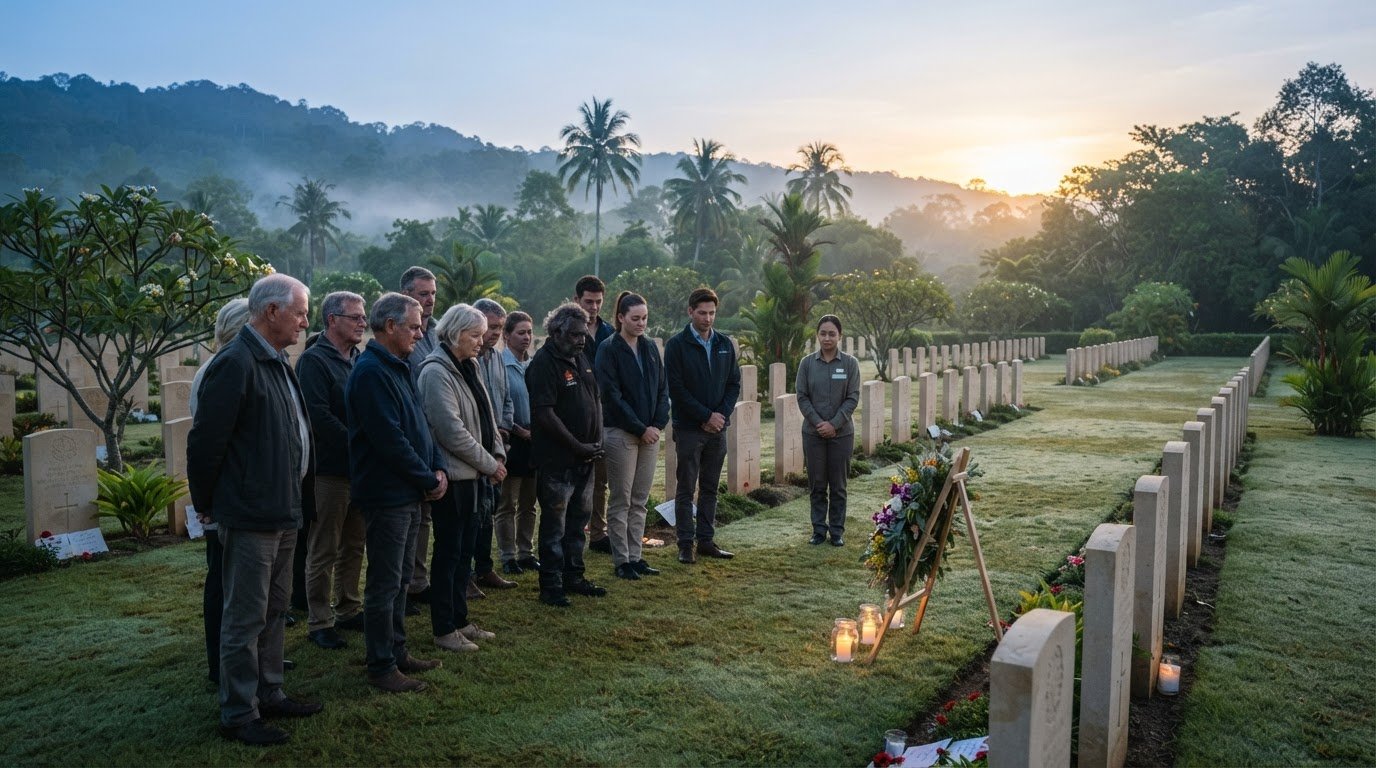
A commemorative journey should be chosen for the history it honours, not simply the countries it visits. If general holiday listings make it hard to distinguish remembrance from sightseeing, look closely at the itinerary. Anzac Day tours Southeast Asia can bring travellers to dawn services and significant military heritage sites, with historical guidance that gives each visit context.
This guide explains what sets an escorted commemorative journey apart from a general Southeast Asia holiday and what to consider before choosing one. Thailand, Malaysia and Vietnam each have distinct wartime histories, so the right destination depends on the stories and places you wish to understand. Learn what escorted group travel involves, how to compare tour itineraries and what to prepare before departure. The purpose is not simply to travel, but to pause, listen and remember with respect.
Key Takeaways
- Choose Anzac Day tours Southeast Asia by the history they honour, not just the destinations on the itinerary.
- Look for a clear connection between historical guidance, dawn service participation and visits to military heritage sites.
- Compare Thailand, Malaysia and Vietnam by their distinct wartime histories and commemorative settings.
- Review the departure itinerary and prepare your travel documents, personal readiness and plans for attending services.
- Use current Australian Government travel and entry advice as part of your preparation for an escorted journey.
What makes an Anzac Day tour through Southeast Asia different?
An Anzac Day tour is a guided journey shaped by remembrance and military heritage. It helps travellers understand the people, events and legacies connected to conflict, then honour service through commemorative moments and visits to significant sites. A dawn service may be the emotional centre of the journey, while historical guidance places each memorial within its wider context.
This focus distinguishes commemorative travel from a holiday organised mainly around sightseeing. Cultural experiences and time to explore may also feature, but they sit alongside the journey’s purpose of reflection. Anzac Day began with remembrance of the Gallipoli campaign and has come to honour Australians and New Zealanders who served in wars and conflicts. Read more about the history of Anzac Day to understand how that act of remembrance has evolved.
Southeast Asia’s military history is not one story. Thailand’s military heritage includes the Burma-Thailand Railway and Hellfire Pass. Malaysia has its own history of wartime campaigns and military heritage, while Vietnam offers another chapter of regional military history. These destinations are not interchangeable. The itinerary’s historical focus depends on the places it visits and the stories it explores.
How does commemorative travel differ from a regular Southeast Asia holiday?
Commemorative travel asks visitors to approach memorials with attention and respect. Guided interpretation can connect what travellers see with the people and events being remembered. Sightseeing may accompany that purpose, but it should not displace it. When comparing Anzac Day tours Southeast Asia, look for a clear thread linking the service, historical context and heritage visits.
Who may find an Anzac Day journey meaningful?
Veterans, descendants, history enthusiasts and travellers seeking a reflective experience may each find meaning in these journeys. Their connections to service and remembrance will differ, and no single response is expected. An escorted group tour also involves shared moments, such as attending a service together and listening to historical interpretation. Allow room for personal reflection as well as the group experience.
How do Anzac Day tours bring dawn services and military history together?
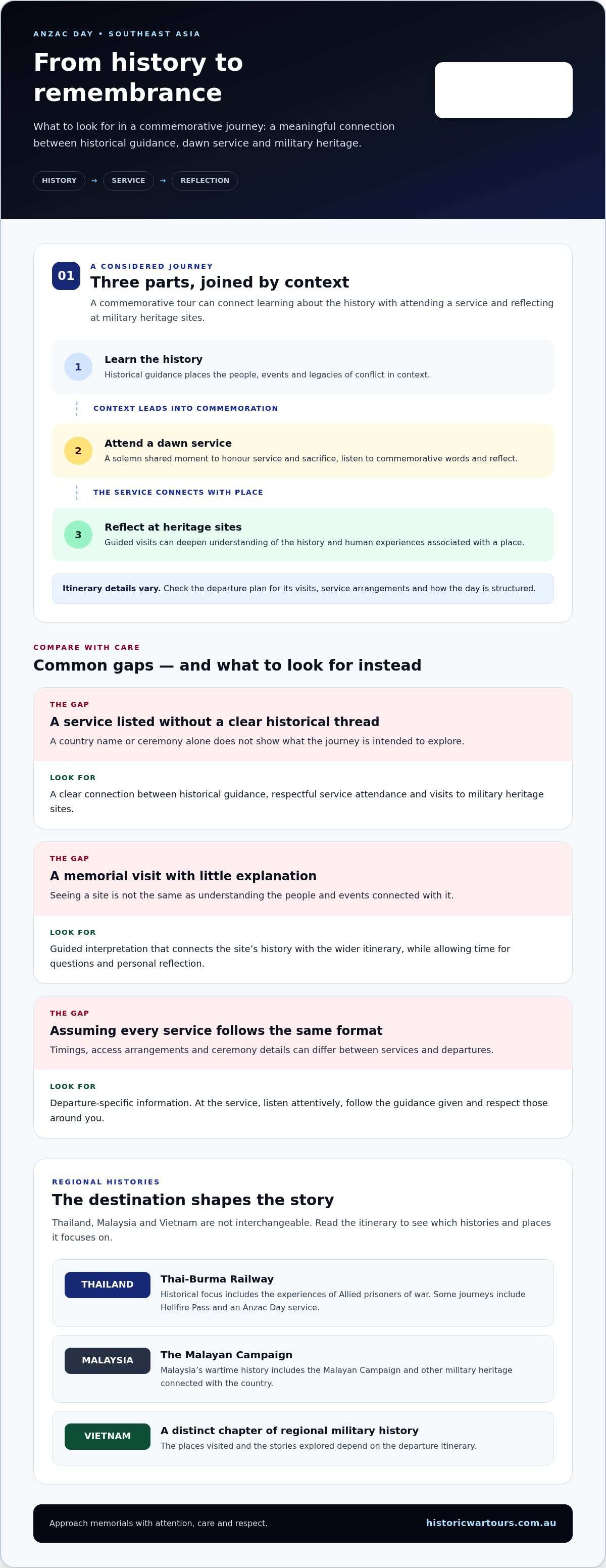
Anzac Day tours Southeast Asia connect commemoration with the history of the places where it takes place. A considered journey might follow a simple sequence: learn about the history, attend a service, then reflect at military heritage sites. Historical commentary helps travellers see more than a memorial or landscape. It can place each visit within the experiences of those who served and the communities shaped by conflict.
An escorted commemorative tour is a guided group journey that brings historical interpretation, respectful service attendance and visits to military heritage sites together. The sequence, service arrangements and locations depend on the departure itinerary. Read it for the planned visits and how the day is structured.
What can travellers expect around an Anzac Day dawn service?
A dawn service is a solemn act of remembrance, not a performance for visitors. Travellers may gather with others to honour service and sacrifice, listen to commemorative words and share a moment of reflection. The Australian Government’s Department of Veterans’ Affairs provides details about official Anzac Day services overseas, including services in Southeast Asia.
Approach the gathering with care. Listen attentively, follow the guidance given at the service and respect those around you. Timings, access arrangements and ceremony details can differ, so use the information for your departure rather than assuming every service follows the same format.
Why add guided visits to military heritage sites?
A service offers a shared moment of remembrance; a guided visit can deepen understanding of the history behind it. At sites connected with the Thai-Burma Railway, for example, historical interpretation can help travellers consider the wartime events and human experiences associated with the railway. The aim is not to reduce complex lives to a single account, but to encounter the place with greater knowledge and reflection.
Guided commemorative visits also give the group time to pause after the formal service. An escort can connect a site’s history with the wider itinerary, while leaving room for questions and personal reflection. That context is valuable when a journey includes several memorials or heritage locations.
For a clearer sense of how these elements come together, explore fully escorted Anzac Day tours, where dawn services and guided commemorative visits form part of a military-history journey.
How should you compare Anzac Day tour experiences across Southeast Asia?
Compare the history a journey explores, the setting for its commemorative moments and the balance of visits across the itinerary. This helps distinguish a military-history tour from a general holiday with occasional historical stops. For Anzac Day tours Southeast Asia, the country name alone does not tell you what the journey will focus on. Read the itinerary for a clear connection between its history, service and heritage visits.
| Destination | Historical focus | Commemorative setting and itinerary emphasis |
|---|---|---|
| Thailand | The Thai-Burma Railway and the experiences of Allied prisoners of war. | Some journeys include Hellfire Pass and an Anzac Day service. The departure itinerary outlines its planned visits and arrangements. |
| Malaysia | The Malayan Campaign and other military heritage connected with the country. | Malaysia offers significant settings for remembrance. The itinerary outlines which memorials and related sites are included. |
| Vietnam | The country’s distinct campaign histories, military sites and memorials. | Consider how guided visits develop the historical focus. Service arrangements may differ from those on journeys in Thailand or Malaysia. |
Use the table as a starting point, not a substitute for reading the full route. A strong commemorative itinerary explains why each visit matters. If historical sites appear as brief stops between general sightseeing activities, the journey may not provide the depth of remembrance you want. Look for a clear purpose, guided context and suitable time for reflection, rather than simply counting the number of locations.
What historical context might shape a Thailand-focused journey?
Thailand’s military-history context includes the Thai-Burma Railway and the suffering of Allied prisoners of war forced to work on it. Hellfire Pass is associated with this history. Compare the departure itinerary to see which memorials and historical sites it visits and how they fit into the journey.
How do Malaysia and Vietnam offer different historical perspectives?
Malaysia’s history includes the Malayan Campaign and other wartime heritage. Vietnam’s military-history journeys draw on a different set of campaign histories, sites and memorials. These contexts should be understood on their own terms, not treated as interchangeable chapters. For each itinerary, note the historical themes, named sites and how guided visits support understanding. Service arrangements and locations depend on the departure.
How can you prepare thoughtfully for an escorted Anzac Day tour?
Good preparation supports both the practical demands of travel and the reflective purpose of the journey. Before departure, understand the route, organise your documents and consider what will help you participate comfortably at services and heritage sites. For Anzac Day tours Southeast Asia, preparation depends on the destinations and itinerary.
What should you understand before joining a group journey?
Read the departure information closely. Note the route, commemorative services, guided visits, daily pace and practical details supplied for the sites. An escorted group journey brings travellers together as they move between locations, with the schedule shaping when the group travels, visits and gathers. Use the tour information to plan for the route and daily arrangements.
Keep your travel documents in order and review current entry requirements for every destination on your itinerary. Australian travellers can consult Smartraveller for official Australian Government travel advice, then review the information for each destination before departure. Requirements and advice can change, so use current guidance rather than relying on details from an earlier trip.
How can you participate respectfully at commemorative sites?
Consider your personal readiness as well as the logistics. Review information about walking distances, steps, uneven surfaces, heat or other physical demands, and plan clothing and footwear accordingly. For example, the walk to the Hellfire Pass memorial from its Interpretive Centre is about 20 minutes and includes steps and uneven ground. That example applies to this site, not every itinerary. If mobility affects your plans, use the departure information to understand the demands of its visits.
At services and memorials, follow instructions from organisers and site staff. Listen attentively, leave space for others and allow quiet moments for reflection. Choose practical, respectful clothing and comfortable footwear suited to the conditions described for your journey. Be considerate with photography: avoid disrupting ceremonies or intruding on others’ moments of remembrance.
- Before travel: Review the route, services, visits and daily pace.
- Documents: Check passport validity and current entry information for your destinations.
- Personal readiness: Consider walking conditions, weather and any mobility needs.
- At commemorations: Follow guidance, participate respectfully and photograph with care.
Historic War Tours offers fully escorted military-history journeys with dawn services and guided commemorative visits. Explore escorted Anzac Day tours to consider a journey centred on remembrance and regional military heritage.
Choose an escorted Anzac Day tour that honours service and legacy
A considered choice begins with the history you want to understand. Look beyond the destination name and read how the itinerary connects military heritage, commemorative service and guided visits. A journey should give these elements a clear purpose, while allowing space to listen, reflect and remember.
Historic War Tours is an Australian-owned operator of fully escorted military-history journeys across Southeast Asia. Its Anzac Day tours include dawn services and guided commemorative visits at significant regional war memorials. Historical interpretation helps place those visits in context, grounding the experience in the stories and legacy associated with each location.
What does a fully escorted military-history journey offer?
It brings a group together to travel between significant military heritage sites with guidance along the way. The itinerary provides structure, while historical commentary can help travellers understand the events and human experiences connected to each place. This differs from choosing destinations for sightseeing alone. The journey’s value rests in its historical focus and the care given to commemorative moments.
Thailand, Malaysia and Vietnam each hold distinct military histories. As you consider Anzac Day tours Southeast Asia, reflect on which context you want to explore and read the details for that departure. The route and visits shape what you will encounter, so a considered itinerary matters more than a long list of stops.
How do you take the next step towards a commemorative journey?
Review the tour information at your own pace. Consider the historical focus, the service and memorial visits described, and whether the journey’s structure suits the experience you want. An escorted group format offers a shared way to visit heritage sites, while guided interpretation can deepen understanding of their significance. The purpose remains remembrance, not simply travel between places.
Historic War Tours brings these elements together through escorted Anzac Day journeys centred on dawn services and guided commemorative visits. Explore the tour information and consider which regional history speaks most closely to your reason for travelling. Take time to choose a journey that reflects the remembrance you wish to honour.
Choose a journey shaped by remembrance
The most meaningful Anzac Day tours Southeast Asia are guided by the history they honour, not simply the places they visit. Compare each itinerary’s historical focus, commemorative service and visits to military heritage sites. Then prepare by reviewing the route, considering its physical demands and checking current Australian Government travel advice.
Historic War Tours is an Australian-owned military-history tour operator offering fully escorted group journeys. Its Anzac Day tours include dawn services and guided commemorative visits, bringing historical context and shared remembrance together. The result is a purposeful way to encounter the region’s military heritage with care and respect.
Consider which history you wish to understand and what you hope to carry with you from the journey. Explore Anzac Day tours and find a thoughtful way to honour service and legacy.
Frequently Asked Questions
What is an Anzac Day tour in Southeast Asia?
An Anzac Day tour in Southeast Asia is a guided journey focused on remembrance and regional military heritage. Depending on the itinerary, travellers may attend a dawn service and visit significant military sites with historical guidance. The purpose goes beyond seeing several countries: it is to understand the history and honour those who served. Read the details for your chosen departure to see its destinations, planned visits and service arrangements.
Can you attend an Anzac Day dawn service on a Southeast Asia tour?
Yes, some Anzac Day tours include attendance at a dawn service as part of their commemorative programme. The service location, access arrangements and other scheduled visits depend on the departure. Treat the occasion with care and follow the guidance provided for the gathering. Review the tour information for its planned service rather than assuming every regional tour attends the same ceremony or follows the same arrangements.
Which countries can an Anzac Day tour in Southeast Asia visit?
Anzac Day tours Southeast Asia may focus on Thailand, Malaysia or Vietnam, each with a distinct military-history context. An itinerary may visit one destination or include more than one, so do not assume every tour follows the same route. Compare the historical focus, commemorative setting and planned heritage visits for the departure you are considering. The itinerary is the clearest guide to the countries and sites included.
Are Anzac Day tours in Southeast Asia fully escorted?
Historic War Tours offers fully escorted military-history group journeys across Southeast Asia. An escorted format brings guided travel through significant heritage locations, with historical context supporting the visits. Routes, sites and daily arrangements vary by itinerary. Read the information for the particular tour to understand how its schedule brings together commemorative activities and time at historical places. This helps you decide whether the journey’s structure suits your interests and needs.
What should I consider before booking an Anzac Day tour?
Consider the tour’s historical focus, planned commemorative visits, destinations and daily pace. Reflect on what you hope to learn or honour, and whether the itinerary suits your travel needs, including any mobility considerations. Review the departure information for service arrangements, site visits and practical details. Before travelling, check current entry requirements and travel advice through official Australian Government sources, as guidance may change between planning and departure.
Is an Anzac Day tour in Southeast Asia suitable for someone interested in military history?
Yes, these journeys are designed for travellers seeking guided engagement with military heritage and remembrance. Historical commentary can place memorials and other sites in context, while the Anzac Day programme gives the journey a commemorative focus. The depth and subject matter vary by itinerary. Compare the historical emphasis and planned visits to find a journey that aligns with the periods, places or stories you are most interested in understanding.